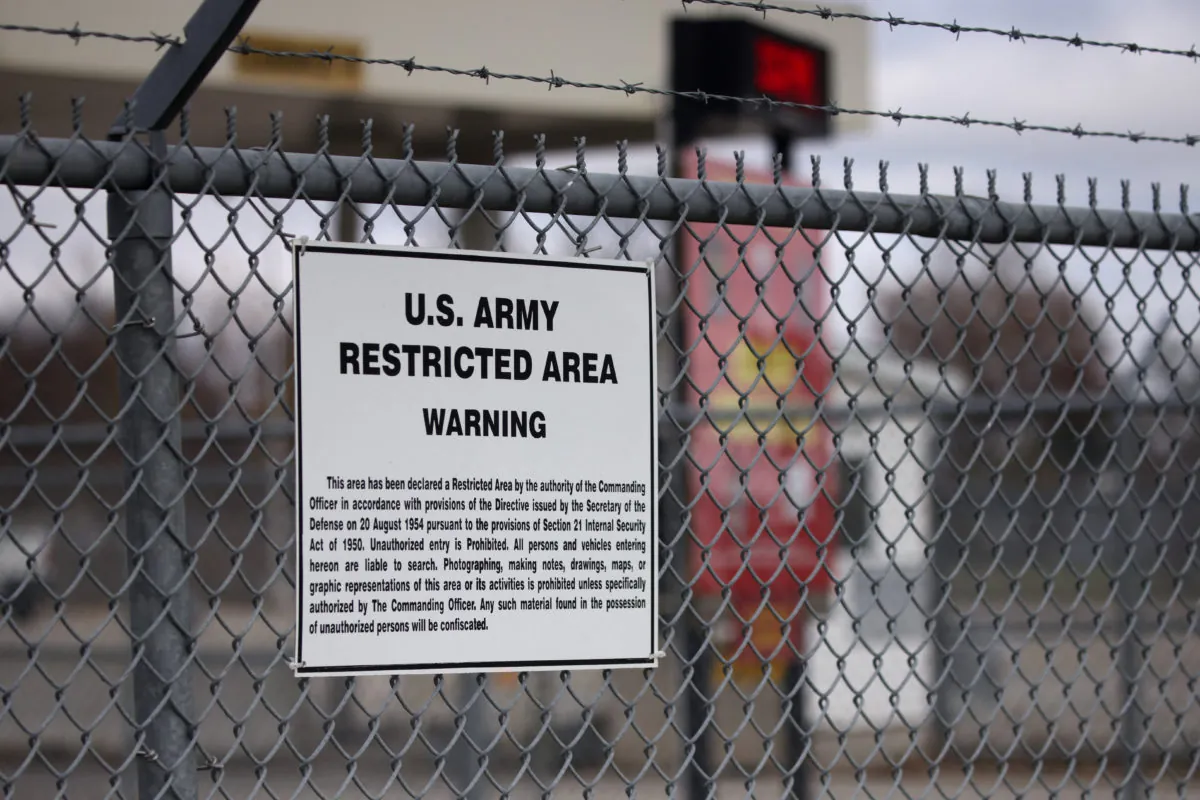
The United States Army is preparing to conduct a controlled detonation of nearly five tons of unstable lead azide at the Iowa Army Ammunition Plant in Middletown on Wednesday, November 25. Federal officials say the operation is necessary to prevent an accidental explosion involving deteriorating hazardous materials.
The announcement comes after several postponements, legal challenges from environmental organisations and mounting concerns among residents about potential lead contamination. Federal emergency management authorities have recommended temporary evacuation for certain communities and introduced assistance programmes for affected households ahead of the Thanksgiving holiday.
US Army Says Controlled Detonation Is Necessary to Prevent Accidental Explosion
The US Army has confirmed that the hazardous stockpile at its southeastern Iowa ammunition facility has deteriorated to a condition that presents significant safety concerns. Military officials discovered the problem during a routine inspection earlier this year, prompting a technical assessment involving multiple federal agencies.
The material, identified as lead azide, has historically been used in military ammunition production. Officials determined that its deteriorated condition made conventional handling and transportation unsafe, creating an urgent need for disposal.
Following an extensive safety assessment, the Army concluded that destroying the material at its existing location was the most viable option. Acting Secretary of the Army Adam Telle emphasised that protecting nearby communities remained the central priority of the operation.
The planned detonation involves coordination between military authorities, the Environmental Protection Agency, the Federal Emergency Management Agency and other government departments.
Federal officials maintain that continuing to store the deteriorating material presents an unacceptable risk of an uncontrolled explosion. They have introduced protective measures intended to reduce environmental exposure and protect surrounding communities.
The operation has been scheduled for Wednesday morning, subject to suitable weather conditions and final safety assessments. Authorities have stressed that environmental monitoring and emergency response arrangements will remain in place throughout the operation.
Iowa Residents Urged to Evacuate Amid Concerns Over Toxic Lead Exposure
Federal authorities have recommended temporary evacuation for residents in Middletown and designated surrounding areas because of the possibility of airborne lead particles following the controlled explosion.
The Federal Emergency Management Agency has arranged support for households choosing to relocate, including transportation, temporary accommodation, meals, drinking water and essential supplies. Accommodation assistance is currently scheduled to continue through November 27, with additional flexibility available where necessary.
Residents outside the recommended evacuation area have also received precautionary guidance, including instructions to remain indoors and keep windows closed where advised by emergency management officials. Authorities intend to notify evacuated residents when conditions permit their safe return.
Public health concerns remain significant because lead exposure can damage the nervous system and affect childhood development. Environmental organisations have also raised concerns about contamination potentially affecting agricultural land, waterways and residential properties.
The US Department of Agriculture has identified approximately 350 farms that could potentially be affected and has issued precautionary recommendations concerning livestock, animal feed and water supplies.
Researchers from the University of Iowa are expected to monitor environmental conditions surrounding the operation, including air, soil and water quality. The findings could help authorities evaluate potential contamination and determine whether further protective measures are necessary.
Federal Court Clears Detonation Plan Following Environmental Legal Challenge
The planned operation has faced considerable scrutiny from environmental organisations and residents who questioned whether sufficient measures had been established to prevent contamination.
Environmental groups filed a legal challenge seeking to halt the detonation, arguing that the potential release of toxic particles could create lasting consequences for public health and surrounding ecosystems. The litigation contributed to uncertainty over the operation's schedule.
A federal appeals court subsequently lifted a temporary restriction on the plan on Monday, November 23, allowing military authorities to proceed. The decision followed several postponements and public discussions involving President Donald Trump and Iowa Governor-elect Rob Sand.
Residents have also expressed frustration over the timing of the operation, which falls immediately before Thanksgiving, and the adequacy of earlier communications from federal authorities.
Military officials maintain that further delays could increase the danger associated with the deteriorating stockpile. Environmental advocates, however, continue to question the potential long-term consequences of releasing lead particles into surrounding communities.
The operation represents a significant public safety and environmental management challenge for federal authorities. Once the detonation is completed, environmental monitoring results will be important in determining its actual impact and whether additional cleanup or public health assistance is required.