A Ukrainian drone strike targeting a Russian warship in eastern Libya has brought the Russia-Ukraine conflict to a new battleground thousands of miles from Europe, highlighting how both countries are using the divided North African nation as part of their wider confrontation.
Ukrainian President Volodymyr Zelenskyy said a Russian navy corvette sank in the Mediterranean Sea off Benghazi, eastern Libya, on Sunday. Ukrainian forces reportedly launched sea drones from western Libya, where they have been operating covertly under an arrangement with the country's rival administration.
The government based in Benghazi is aligned with Russia, which has become a major arms supplier to Khalifa Hifter. Hifter's self-styled Libyan National Army controls eastern and southern Libya and maintains close relations with Moscow.
Ukrainian officials defended the operation in a third country, describing the Russian vessel as a legitimate military target. They said the strike supported Ukraine's strategic objectives by weakening Russia's wartime economy and challenging its overseas interests. The officials spoke anonymously because they were not authorized to brief the media.
The operation follows an earlier Ukrainian attack on Russian maritime interests near Malta. In March, Ukrainian sea drones struck and badly damaged a Russian-flagged tanker carrying liquefied natural gas near Maltese waters. Sunday's operation, however, represents a potentially significant escalation in Ukraine's efforts to target Russian assets outside the immediate theater of war.
Libya Becomes a Proxy Battleground
Oil-rich Libya occupies a strategically important position along the Mediterranean and shares land borders with six countries. However, its political landscape remains divided between competing administrations supported by different foreign powers.
The internationally recognized government in Tripoli, led by Prime Minister Abdul-Hamid Dbeibah, has developed ties with Ukraine and its Western allies. Those relationships partly support its efforts to maintain power and address migration routes used by people seeking to reach Europe. The western administration relies on an assortment of loosely aligned armed groups and militias.
In eastern Libya, Prime Minister Ossama Hammad leads a rival administration whose powerful ally, Khalifa Hifter, maintains close relations with Russia.
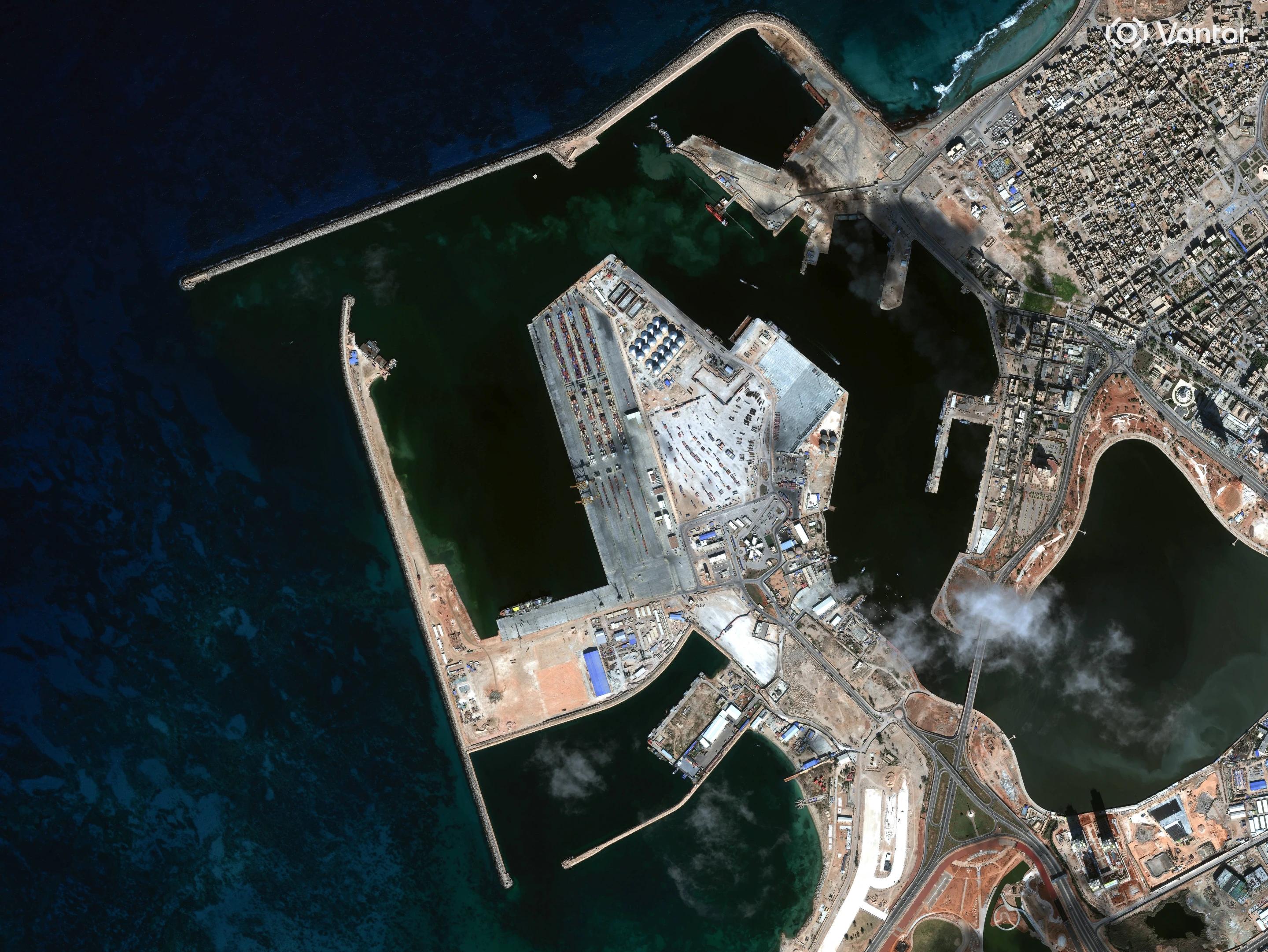
Two Libyan officials said Sunday's attack severely damaged the Russian navy corvette Mercury while it was docked at the Benghazi Naval Base. Zelenskyy also identified a second target, the Russian cargo vessel MV Angara, which he said had been used by Russian forces to transport weapons. According to the Ukrainian president, the Mercury was escorting the Angara when the attack occurred.
The corvette had docked in Benghazi for refueling and supplies under a cooperation agreement between Russia and Hammad's administration, according to a statement from the eastern Libyan authorities.
The authorities announced a joint investigation with Russia to establish “the circumstances of the attack, its source, and the party behind it.” The statement also warned that Libya “maintains its right to respond by all means necessary to ensure its sovereignty.”
Two eastern Libyan officials briefed on the investigation said an initial inquiry found that several Ukrainian sea drones had been launched against the vessel from a base operated by Ukrainian forces in western Libya.
According to the officials, at least four drones were intercepted and destroyed, while two struck the corvette, a smaller naval vessel designed for coastal patrols and escort missions. One official said at least 10 people, including Libyan and Russian nationals, were wounded. Both officials were affiliated with Hifter's Libyan National Army and spoke anonymously because they were not authorized to comment publicly.
Hours after the attack on the Russian warship, another sea drone strike hit a Maltese-flagged commercial vessel off Benghazi, according to the Libyan coast guard. The crew was evacuated, and some members were injured and taken to hospitals, the Health Ministry said without providing a casualty figure. Local media broadcast footage showing the vessel off Benghazi before an explosion engulfed it in flames.
Ukraine Expands Its Presence in Western Libya
Zelenskyy said Sunday's operation was conducted by Ukraine's security service, known as the SBU. The agency has carried out a series of long-range operations against Russian vessels and maritime assets beyond Ukrainian waters in the Black Sea.
Libyan officials who spoke to The Associated Press earlier this year said Ukrainian forces had been operating in western Libya for approximately a year. Ukrainian officials have described the presence as part of broader efforts to counter Russian influence and protect Ukraine's interests in the region.
The Ukrainian personnel, many of them drone specialists, reportedly operate mainly from an air base in Misrata, a western coastal city. Other facilities in the capital, Tripoli, and the coastal town of Zawiya have also been used, according to the officials.
The deployment was part of a covert agreement between Kyiv and Dbeibah's government, the officials said. They added that Western countries, including the United States, supported the arrangement as part of wider efforts to counter Russia's regional influence.
In March, Ukrainian forces launched a sea drone operation that badly damaged the Russian-flagged tanker Arctic Metagaz near Maltese waters. The vessel was carrying approximately 61,000 tons of liquefied natural gas and was part of Russia's so-called shadow fleet, which Moscow uses to transport energy exports despite Western sanctions imposed following its invasion of Ukraine.
Russia blamed the earlier attack on Ukrainian sea drones. Kyiv has argued that revenue generated by Russian energy exports helps finance Moscow's war effort.
Libya's Divided Political Loyalties
Libya has experienced prolonged instability since a NATO-backed uprising in 2011 developed into a civil war that toppled longtime leader Moammar Gadhafi, who was later killed.
For much of the past decade, the country has remained divided between Dbeibah's administration in the west and Hammad's administration in the east. The internationally recognized government in Tripoli maintains close relations with Turkey and Western countries, while Hifter has cultivated strong ties with Russia and the United Arab Emirates.
Russia has used Libya as a transit point for operations elsewhere in Africa and as an additional strategic foothold in the southern Mediterranean, alongside its military bases in Syria. Russian naval vessels regularly rotate through the region.
The growing involvement of both Russia and Ukraine risks drawing Libya further into a conflict extending well beyond its borders. The latest attack adds another dimension to foreign competition in a country that has struggled for more than a decade to overcome its internal divisions.
Strike Highlights Ukraine's Expanding Maritime Reach
Aliona Hlivco, a research fellow at the think tank GLOBSEC, said the operation demonstrated Ukraine's growing ability to project maritime power beyond the Black Sea. She described the country as becoming an increasingly consequential geopolitical actor across the wider Mediterranean region.
Jalel Harchaoui, a Libya analyst with the Royal United Services Institute, characterized Ukraine's Mediterranean strikes as “exceptionally brazen and provocative.”
“The question now is how Russia will retaliate,” Harchaoui said. “Perhaps even more pressing is how the Hifter family will respond, given how traumatic the scale of the destruction has been for eastern Libyan authorities.”
The attack has raised questions about the next stage of Russia's response, the security of maritime traffic around Libya and the potential consequences for the country's already divided political and military landscape.