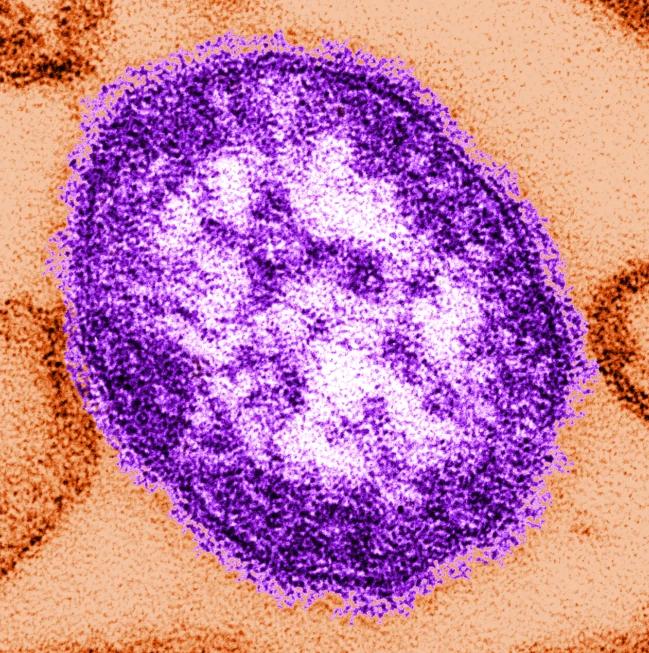
Doctors across the United States are raising concerns about babies being born with measles, a rare and potentially life-threatening condition that can occur when an infected pregnant woman passes the virus to her fetus before birth. The emergence of congenital measles marks a troubling development after decades in which widespread vaccination and disease control had made such cases exceptionally uncommon.
Preliminary figures published Monday in the medical journal NEJM Evidence show that 13 congenital measles cases were reported to the U.S. Centers for Disease Control and Prevention between the beginning of 2025 and the end of September. The cases occurred during large measles outbreaks across the country.
“This is a brand new phenomenon,” said Michael Osterholm, director of the University of Minnesota’s Center for Infectious Disease Research and Policy.
The development is linked to declining vaccination rates, which have contributed to the spread of measles. The Pan American Health Organization is expected to announce Tuesday that the United States has lost the measles-free status it has maintained since 2000. According to the CDC, more than 7,500 measles cases have been reported in the country over the past two years.
“We’re now seeing levels of measles that we haven’t seen in 30 years,” said Dr. Adam Ratner, a member of the American Academy of Pediatrics’ infectious diseases committee. He explained that congenital measles does not occur when the disease is effectively controlled.
Measles During Pregnancy Raises Public Health Concerns
The preliminary congenital measles figures appeared in a public health alert published by NEJM Evidence in partnership with the center directed by Osterholm. The alert also identified 112 confirmed cases of measles during pregnancy. Almost all involved women who had not been vaccinated against measles or whose vaccination status was unknown.
The CDC scientists who authored the alert emphasized that vaccination before pregnancy and maintaining high vaccination rates across communities are important measures for preventing measles and its related complications.
Medical guidance on congenital measles from the American Academy of Pediatrics is already being shared with healthcare professionals. Pennsylvania's health department also issued an advisory last month for healthcare providers, schools, childcare centers and other organizations. The state currently has the largest measles outbreak in the nation.
Why Congenital Measles Is Emerging Now
People develop immunity to measles either through infection or vaccination. Before the measles vaccine became available, many people contracted the highly contagious virus during childhood. Later, widespread vaccination helped protect communities and sharply reduced transmission.
However, doctors say the combination of vaccine success and more recent skepticism toward vaccination has created a population of women who may have neither vaccine-derived immunity nor protection from previous infection.
“What’s happening is we have so many women of childbearing age who were not vaccinated in the last 25 years, nor have they ever had exposure to measles because for the last 25 years we have beaten it back,” Osterholm said. “Now, this group is highly susceptible to measles.”
Doctors identify vaccination with the measles, mumps and rubella vaccine, commonly known as MMR, before pregnancy as the best way for women to protect themselves and their babies. Antibodies produced by the mother can cross the placenta and provide protection to the fetus. That protection may continue for several months after birth.
However, the MMR vaccine cannot be administered during pregnancy. Women who are unvaccinated, have never had measles and are exposed to the virus while pregnant may receive a solution containing antibodies within six days of exposure. This treatment can help reduce the risk of infection and complications.
Congenital Measles Can Cause Serious Complications
The risk of transmission is particularly concerning when a woman contracts measles shortly before giving birth. According to the American Academy of Pediatrics, an estimated 25% to 30% of babies born to someone who develops measles shortly before delivery may become infected.
Doctors consider a baby to have congenital measles when exposure occurs in the uterus and evidence of the infection appears very soon after birth. Common symptoms include fever, jaundice and the characteristic measles rash.
In more severe cases, the infection can lead to pneumonia, encephalitis and subacute sclerosing panencephalitis, commonly known as SSPE. This rare brain disorder generally develops many years after a measles infection and is almost always fatal.
Ratner, who has written a book about measles, said there are indications that children with congenital measles may face a higher risk of developing SSPE. They may also develop the condition sooner after infection than other children.
“That’s something that sadly we’re learning more about,” he said.
Declining Vaccination Rates Put Infants at Risk
Doctors are concerned that congenital measles cases could increase if vaccination rates continue to fall. Public health experts generally consider measles outbreaks unlikely in communities where at least 95% of people are vaccinated with the MMR vaccine. However, vaccination coverage in many communities has dropped below that threshold.
Nationally, the CDC reported that 92.4% of U.S. kindergarteners received the required MMR vaccinations during the 2025-26 school year.
Lower vaccination coverage leaves vulnerable people exposed to infection, including infants who are too young to receive routine measles vaccinations. The first MMR dose is normally administered between 12 and 15 months of age. In areas experiencing outbreaks, babies may receive the vaccine as early as six months, although this is earlier than the routine schedule.
Ratner said reversing the decline in vaccination coverage will require sustained efforts from pediatricians, public health institutions and other organizations.
“We need to get back to the point where everybody who can get vaccinated is getting vaccinated, and that’s gonna take some doing,” he said. “It’s going to be a lot of work on the part of pediatricians and public health institutions and lots of others. But it’s an important thing for us to do.”