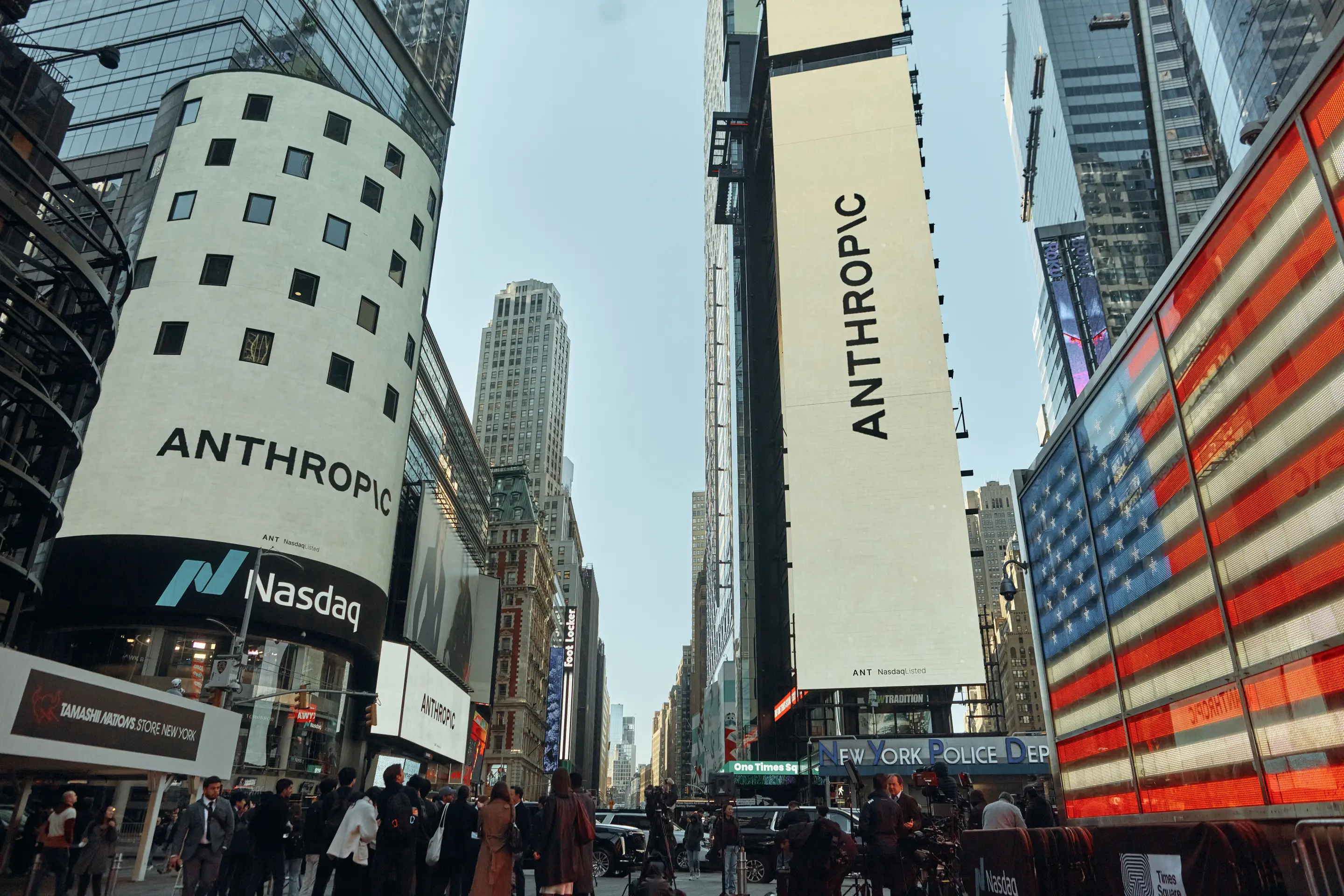
Anthropic’s record-breaking stock market debut is generating expectations of an unprecedented wave of charitable giving, with nonprofits preparing for a potential influx of donations from the artificial intelligence company's founders, employees and early investors.
Philanthropy, according to the story, was one of the interests that initially brought two of Anthropic's founders together. Jared Kaplan, the company's chief science officer, and CEO Dario Amodei were doctoral students who regularly carpooled to an event organized by an academic fellowship. During one of those journeys, they discussed how charitable resources could be directed toward causes capable of producing the greatest positive impact.
“We had so much largesse to, sort of, disperse,” Kaplan joked during a Hertz Foundation discussion in April 2025, recalling conversations about identifying the most effective charitable opportunities.
Those early discussions have taken on new significance following Anthropic's debut on the stock market at a valuation of $1.5 trillion. The company behind the Claude artificial intelligence tool has already announced plans to allocate 5% of its shares to a new Anthropic Public Benefit Fund. Its seven co-founders have also committed to giving away 80% of their equity, representing approximately $112 billion based on the company's IPO valuation.
The potential philanthropic impact extends beyond the founders. Many of Anthropic's employees could become millionaires as they gain the ability to sell vested shares. Their newly acquired wealth could give them the resources to make substantial donations to causes ranging from global health and poverty reduction to animal welfare and AI safety.
Silicon Valley's expectations for technology-driven philanthropy are growing. In a widely circulated blog post published in May, Nan Ransohoff, head of public goods at payments company Stripe, estimated that the valuations of leading U.S. AI companies could generate at least $37 billion annually in intended philanthropic contributions.
“This is a once-in-a-lifetime kind of opportunity for people to really make an impact on extreme poverty,” said Peter Singer, the moral philosopher whose work has influenced many technology-sector donors.
However, nonprofits are not assuming that the money will become available immediately. Many Anthropic employees cannot sell or donate most of their shares until next spring. There are also uncertainties about the charitable priorities of potential donors whose perspectives have been shaped by the rapid development of increasingly powerful AI systems.
Questions about the technology sector's financial stability, including high borrowing costs, recent turmoil at chipmaker Nvidia and warnings about AI-related risks to humanity, have also made some observers cautious about the amount of wealth that will ultimately be distributed.
“The challenge is that deploying philanthropic capital is hard,” said Kumar Garg, president of Renaissance Philanthropy, a nonprofit that connects funders with scientific initiatives. “That’s not an automatic step.”
AI Wealth Could Accelerate a New Era of Philanthropy
Whether artificial intelligence wealth will produce a different model of philanthropy from earlier periods of economic expansion remains an important question. Benjamin Soskis, a philanthropy historian and senior research associate at the Urban Institute’s Center on Nonprofits and Philanthropy, believes there are reasons to expect a distinct approach, although he notes that relatively few technology executives have actually distributed most of their fortunes.
Modern philanthropic foundations emerged from the industrial wealth created after the Civil War. Industrial leaders such as oil magnate John D. Rockefeller Sr. and steel entrepreneur Andrew Carnegie established large institutions designed to address the underlying causes of social problems.
A later generation of technology wealth encouraged a more data-driven and risk-tolerant approach to charitable giving. The Gates Foundation, for example, was established to address major challenges involving global health and poverty.
Soskis believes the AI era brings a combination of extraordinary promise and serious potential danger that could encourage a more urgent approach to giving. He described the moment as carrying both “extreme peril” and “really transformative promise.”
At least one Anthropic co-founder is expected to make a donation in the coming weeks to the Trump Accounts children's savings program, according to comments made Friday by U.S. Treasury Secretary Scott Bessent on CNBC.
Anthropic's rapid expansion has also raised expectations that its approximately 5,300 employees may seek to increase their charitable contributions. The company offers an internal giving program that matches employee equity donations with shares of Class N common stock.
Anthropic also works with donor-advised fund providers, including Daffy. These funds allow individuals to make charitable contributions and recommend grants to nonprofit organizations while offering a tax-efficient alternative to establishing and managing a private foundation.
Daffy CEO Adam Nash expects younger technology employees to become active donors relatively quickly, partly because they can already see the effects of artificial intelligence on society.
“The people working in AI see the impact AI is having already,” Nash said. “And they are giving now, right?”
Nonprofits Prepare for Potential Growth in Donations
Among the organizations positioned to benefit from a potential increase in technology-sector philanthropy is Coefficient Giving, a philanthropic organization established by San Francisco billionaire Cari Tuna and her husband, Dustin Moskovitz, a Facebook co-founder and early Anthropic investor.
A spokesperson for the couple told The New York Times that they transferred their Anthropic stake into an undisclosed nonprofit last year to avoid personally profiting from the investment.
Since 2014, Coefficient Giving has directed more than $8 billion toward global health, animal rights, AI safety and the effective altruism community. The organization has also expanded its funding commitments. In July, it increased its commitment to grantmaker GiveWell to $1 billion.
The announcement cited expectations of “considerably more future funding for this kind of work.”
During a public discussion in late July, Coefficient Giving CEO Alexander Berger said the organization could expand significantly as it responds to changing funding opportunities. He also emphasized that other organizations and approaches would have important roles to play.
“We might grow a lot, in part because we want to spend faster in response to these trends,” Berger said. “But there is a great deal of room for other organizations and approaches, and I do not expect us to play an overwhelmingly dominant role.”
GiveDirectly Builds Capacity for a Possible Funding Surge
GiveDirectly, a technology-focused nonprofit that sends cash directly to households living in poverty without restrictions on how recipients use the money, has spent months identifying obstacles that could limit a rapid expansion of its programs.
According to the organization's president and CEO, Nick Allardice, one important challenge involves ensuring that recipients have mobile phones capable of receiving digital cash transfers.
GiveDirectly provides phones for approximately $15, with the cost generally deducted from recipients' first payment. To prepare for a possible increase in funding and demand, the nonprofit secured investments this year to develop a supply chain capable of supporting a much larger distribution of mobile phones.
The organization hopes these preparations will allow it to expand quickly if charitable contributions increase.
“I have this level of cautious optimism,” Allardice said. “But I can’t foresee the future, and I don’t know exactly what’s going to happen.”
Animal Welfare and Effective Altruism Attract Attention
Cameron Meyer Shorb, executive director of Wild Animal Initiative, shares that cautious outlook. His nonprofit funds research focused on the welfare of wild animals, an area that some observers believe could receive greater support from a new generation of technology-sector donors.
Such organizations are often associated with effective altruism, a data-driven philanthropic movement that seeks to direct resources toward causes capable of helping the greatest number of living beings.
The movement suffered reputational damage after Sam Bankman-Fried, one of its prominent supporters and financial backers, received a 25-year prison sentence for cryptocurrency fraud. However, effective altruism has been gaining renewed attention in technology circles that could produce significant wealth as more AI companies enter public markets.
Shorb said effective altruists have learned not to depend too heavily on a single donor. He nevertheless expects “quite a bit” of additional support for animal advocacy and believes midsize donors could play an especially important role.
He has established connections with a couple of Anthropic employees, but said relationships with philanthropic advisers may be even more important. These advisers help wealthy individuals develop their charitable strategies and decide how to distribute their resources.
Shorb also acknowledged the pressure facing employees who may soon become extraordinarily wealthy and attract attention from organizations seeking donations.
“As you can imagine, it’s a pretty tricky place for a soon-to-be billionaire to be to have all this potential power coming soon,” he said. “As soon as anyone finds out about that, anyone who can possibly get their email or phone number will just be knocking down their door. So we’ve tried to be gentle and slow and respectful in our approach.”
For nonprofits, Anthropic's IPO represents a potentially transformative funding opportunity, but the scale and timing of any charitable windfall remain uncertain. Organizations are preparing to expand their operations while recognizing that turning newly created technology wealth into effective, lasting philanthropy will require careful planning and sustained commitments.