President Donald Trump faced a significant political setback in Tuesday’s midterm elections as voter frustration over inflation, tariffs and the rising cost of living contributed to widespread Republican losses in House, Senate and gubernatorial races. Economic concerns dominated the election, with many Americans expressing dissatisfaction with the administration’s handling of prices and household finances.
According to the AP Voter Poll, a survey of approximately 100,000 midterm voters, most respondents believed Trump’s policies had weakened economic growth and contributed to higher living costs. The president’s efforts to attribute inflation to his predecessor, former Democratic President Joe Biden, appeared to have limited impact. Many voters instead associated rising prices with Trump’s tariffs on foreign imports and higher energy costs following the U.S. military campaign against Iran in February.
Approximately two-thirds of voters said Trump’s policies had contributed to inflation, compared with roughly half of voters who attributed inflation to Biden’s policies during the 2022 midterm elections, according to AP VoteCast. Voters across states ranging from California to Mississippi also broadly viewed the administration’s import tariffs as more harmful than beneficial.
The results reflected economic concerns that polling had identified for months before the election. However, Trump continued to defend his record during the campaign. At a final midterm rally in Iowa, he maintained that his administration had performed well and insisted that prices were declining.
Voters Express Economic Disappointment With Trump
Democratic victories in the midterm elections indicated that many Americans were dissatisfied with the economic direction of the country and did not believe the administration's policies were improving their financial circumstances.
Consumer prices had increased 3.7% over the preceding 12 months, compared with an inflation rate of 3% when Trump began his second presidential term. Energy costs also became a major concern following the conflict with Iran. On Wednesday, Trump acknowledged that the war had pushed gasoline prices higher in the short term but defended the military action, citing concerns about Iran’s nuclear ambitions. He indicated that he would make the same decision again if faced with the circumstances.
Although Democrats gained congressional seats, their victories do not guarantee an immediate solution to persistent inflation. Addressing the economic challenges could require cooperation between Republicans and Democrats, while broader economic stability could allow the Federal Reserve to continue reducing inflation through its interest-rate policies.
The election nevertheless demonstrated that voters preferred greater congressional opposition to the administration rather than allowing Trump to govern with limited resistance from a Republican-controlled Congress.
Approximately nine in ten voters said the cost of living was either a crucial or major consideration in their congressional vote. Among those voters, roughly six in ten supported Democratic candidates in their local House races, highlighting the political importance of household expenses.
Economic Growth Continues as Voters Question the AI Boom
Despite widespread dissatisfaction with the economy, several major indicators remained relatively strong. The S&P 500 had gained more than 10% during the year, while the unemployment rate stood at approximately 4.2%. Financial markets also responded positively to Democratic election victories, with stocks rising on Wednesday.
However, a significant portion of recent economic growth has been associated with investment in artificial intelligence infrastructure and technology. The expansion of AI has become an important driver of business investment, supported by an administration that has resisted stronger federal oversight of the industry.
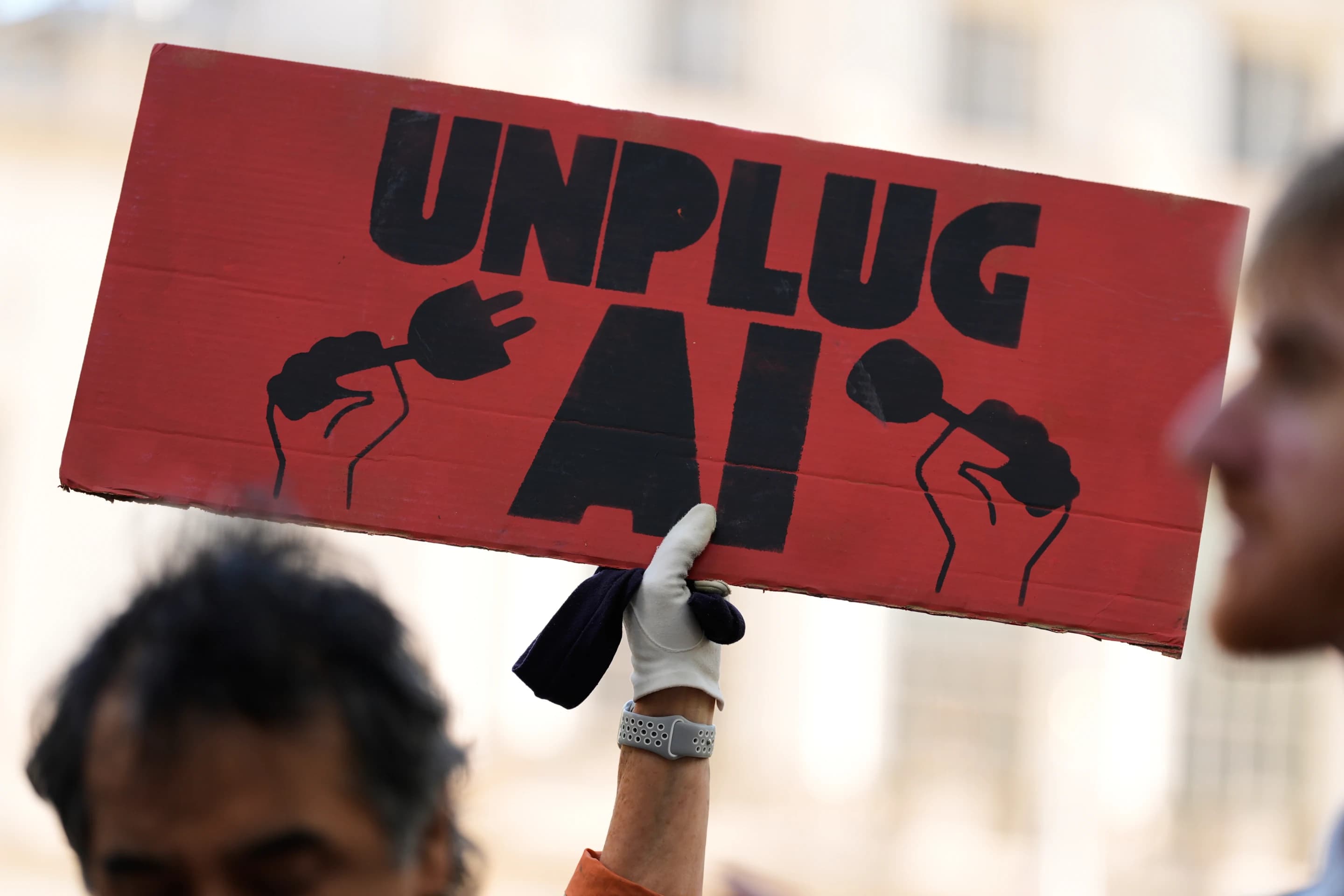
Voters, however, appeared considerably less optimistic about artificial intelligence than Trump and major technology companies. Although the president has promoted the terminology of “super intelligence” in federal documents, the technology was viewed by many voters as a potential source of economic and social disruption.
Approximately six in ten voters said artificial intelligence would do more harm than good to society. Concerns included the possibility that automation could displace workers, reduce employment opportunities and disrupt established industries. Others worried that the rapid expansion of AI investment could represent a financial bubble whose eventual collapse might damage retirement savings and broader financial markets.
Despite these concerns, only around one-quarter of voters identified artificial intelligence as a crucial factor in their election decisions. The findings suggest that while Americans are increasingly concerned about the technology's long-term effects, immediate economic pressures remain more influential in shaping voting behavior.
Growing Wealth Inequality Raises Questions About Economic Fairness
The increasing concentration of wealth among major technology companies and their executives also emerged as an important concern during the elections. Technology billionaires, including Meta CEO Mark Zuckerberg, Nvidia CEO Jensen Huang and Tesla and SpaceX CEO Elon Musk, have become prominent figures around Trump, attending official events and maintaining close public relationships with the president.
However, the visibility of wealthy business leaders alongside the administration has coincided with growing concerns about economic inequality. Nationwide, approximately seven in ten voters said the economy favored wealthy Americans, while only around three in ten believed it was fair to ordinary households.
The perception that economic benefits were concentrated among high-income Americans extended beyond lower-income groups. Even a majority of voters in California households earning at least $300,000 annually in 2025 believed the economic system favored the wealthy.
Nevertheless, American voters continued to express relatively favorable views of capitalism. A slight majority reported having a somewhat or very favorable impression of the economic system, compared with approximately one-third who expressed support for socialism.
Healthcare affordability was another significant concern. Approximately six in ten voters wanted the federal government to take a larger role in addressing medical expenses. Most respondents also believed Trump's policies had made healthcare costs worse, suggesting that dissatisfaction extended beyond inflation and everyday consumer prices.
Income Differences Reveal Trump's Economic Political Challenge
Voters' assessments of the economy differed considerably according to household income. While Trump highlighted economic statistics, including historically low poverty levels, many lower-income Americans reported that their personal financial situations had deteriorated.
Among voters earning less than $50,000 annually, approximately six in ten said they were financially worse off than they had been two years earlier, before Trump returned to the presidency. Their concerns reflected the continued pressure of living expenses, particularly for households with limited financial flexibility.
Higher-income voters generally expressed more favorable views of the economy, but their priorities created a separate political challenge for Trump. These voters were more likely to identify the condition of American democracy as a major concern, and those who prioritized democratic institutions overwhelmingly supported Democratic candidates.
The concerns were partly connected to the administration's use of executive authority. Without congressional approval, Trump had taken actions involving federal workforce reductions, government spending and the introduction of hundreds of billions of dollars in import tariffs. The Supreme Court had ruled earlier in the year that the administration's tariffs were illegal.
Among households reporting annual incomes above $200,000 in 2025, approximately four in ten identified democracy as their most important issue, placing it at a level comparable to economic concerns. Lower-income voters, by contrast, were more likely to prioritize the economy and the cost of living.
Government corruption also featured prominently in voters' decisions. A slim majority identified corruption as a crucial election issue, while approximately half said high prices were a crucial factor. Higher-income voters were considerably less likely than lower-income Americans to identify inflation and rising prices as their primary concerns.
Voters Question Trump's Economic Priorities
The midterm results highlighted broader dissatisfaction with how the administration has approached economic policy and the distribution of financial benefits. Trump's economic strategy has included negotiating business agreements, taking government stakes in private companies and introducing tariffs affecting international trade.
However, many voters appeared unconvinced that these actions were improving conditions for ordinary Americans. The growing influence of wealthy business executives and the concentration of economic power raised questions about whether the administration's priorities adequately addressed the needs of workers and middle-class households.
Approximately six in ten voters said Trump's priorities were misplaced, reflecting concerns that his administration had focused on issues that did not adequately address everyday financial pressures.
The election results suggest that inflation, household expenses and economic inequality remain central political challenges for the administration. Although financial markets and employment indicators have shown resilience, voters' experiences with prices and their perceptions of economic fairness have created a significant gap between national economic performance and public confidence.
For Trump and congressional Republicans, the midterm verdict represents a warning that economic growth alone may not translate into political support unless Americans believe its benefits are reaching ordinary households. The results also demonstrate that tariffs, energy prices, healthcare expenses and concerns about economic inequality can collectively shape voter sentiment and determine the political consequences of economic policy.