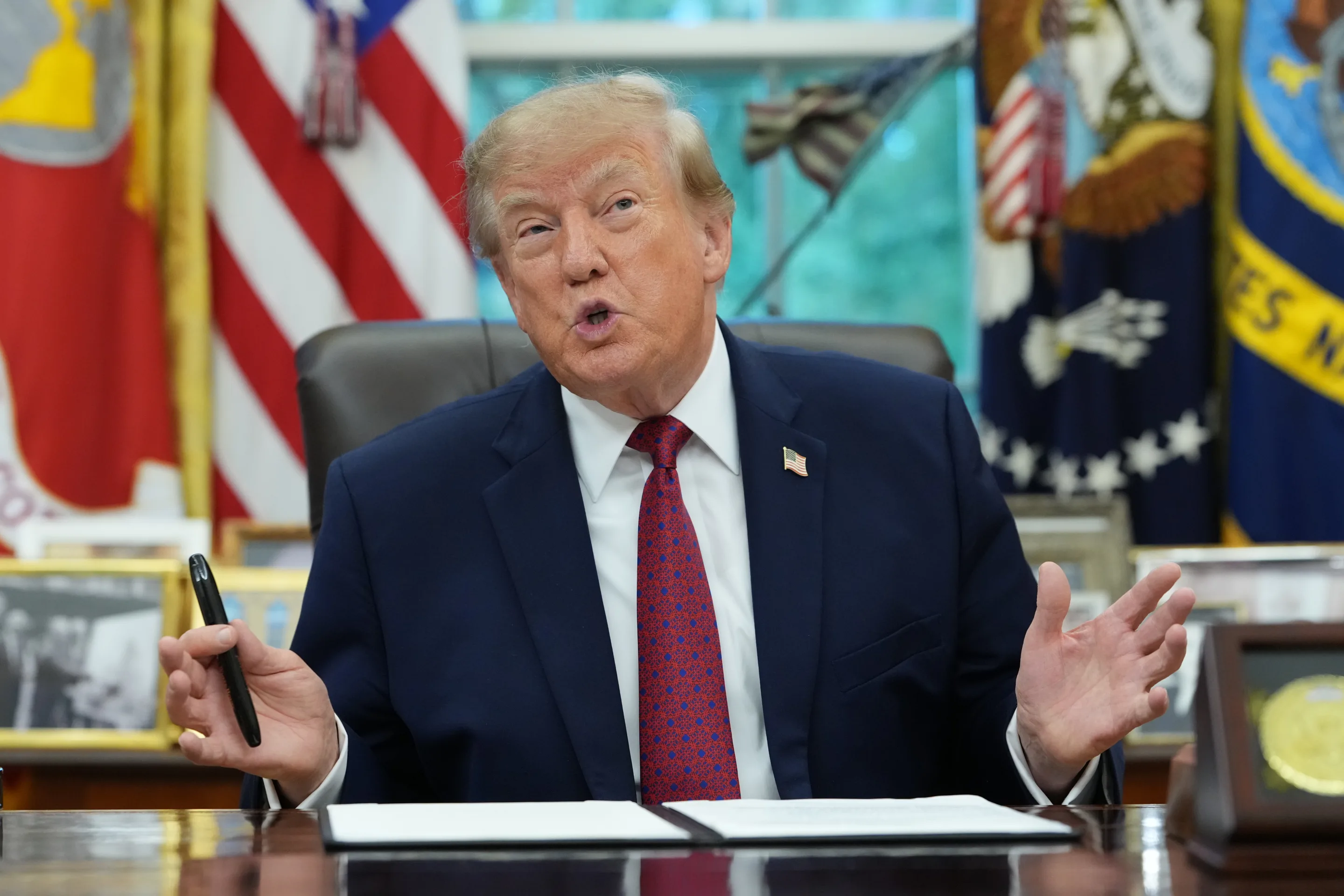
President Donald Trump signed a proclamation on Thursday designating the Oval Office and Cabinet Room as a national monument, announcing the move in his first official action following Republican losses in Tuesday's midterm elections. Trump described the decision as an effort to protect two important spaces within the White House from major structural alterations. However, the proclamation does not prevent future presidents from changing the rooms' furnishings, redecorating their interiors or potentially reversing the designation itself.
Trump presented the measure as a long-term preservation effort, arguing that the Oval Office represents an important national symbol alongside the White House. During the signing ceremony, he said the historic space should not be destroyed or substantially altered by future administrations simply to accommodate different architectural preferences.
The announcement came amid increased attention to Trump's own renovation projects in Washington. During the same week, the president had made several public appearances focused on changes to prominent government landmarks, including his proposed White House ballroom and renovations to the Lincoln Memorial Reflecting Pool.
Although Trump described the proclamation in broad terms, its actual provisions preserve considerable presidential authority over the rooms' appearance and daily operation. The document also does not establish an absolute legal barrier against future changes or guarantee that subsequent administrations will maintain the designation.
Proclamation Preserves Presidential Authority to Redecorate
The proclamation, released after Trump's remarks, directs the Interior secretary to oversee the Oval Office and Cabinet Room as designated national monuments. It also requires documentation, review and consideration of alternative approaches before actions that would substantially alter or demolish their historic structures.
However, the document explicitly states that the designation does not restrict the president's authority to redecorate the monument, select furnishings or undertake ordinary operational and security modifications, provided those changes do not substantially impair its historic structure or architectural character.
This provision means that future presidents will retain considerable flexibility over the interior appearance of the Oval Office and Cabinet Room. They can continue selecting furniture, changing decorations and making routine adjustments without necessarily violating the proclamation.
Trump separately suggested that significant architectural changes would require congressional review. He argued that if a future administration wanted to fundamentally alter the Oval Office's shape, it would need to seek approval from Congress. However, the proclamation itself does not explicitly establish the congressional approval requirement he described.
Trump used the example of replacing the Oval Office's distinctive shape with a square design to illustrate the type of alteration he hoped to prevent. He expressed confidence that lawmakers would oppose such a proposal.
There is also a question of how durable the designation will prove to be. Trump has previously reversed national monument designations established by earlier presidents, demonstrating that such executive actions can themselves become subject to reversal by subsequent administrations.
White House Renovations Become Part of Trump's Preservation Push
The proclamation comes as Trump continues to oversee extensive decorative and renovation changes throughout the White House. Since returning to office, he has introduced numerous modifications to prominent rooms, particularly the Oval Office, where the traditional interior has been transformed with additional gold decorations, portraits and other decorative features.
The president has filled portions of the Oval Office walls with portraits, a copy of the Declaration of Independence and numerous gold-colored accents. Gold-framed artwork and decorative wall appliqués have also become prominent elements of the updated interior.
During Thursday's remarks, Trump highlighted new chandeliers installed in the Cabinet Room, explaining that the additions were intended to address what he considered inadequate lighting.
His preservation announcement has attracted attention partly because of the contrast between his stated desire to protect historic White House spaces and his own extensive renovation activities. Most notably, Trump demolished the White House East Wing to make room for his proposed ballroom project.
The ballroom development has also generated legal and political scrutiny. Trump has faced lawsuits alleging that some of his Washington renovation and beautification projects were undertaken without obtaining the necessary approvals.
VETO Cap Highlights Changing Congressional Balance
A red baseball cap displaying the word VETO was placed on the Resolute Desk during the proclamation signing. The visual reference appeared to acknowledge the changing balance of political power in Washington following the midterm elections, in which Republicans suffered significant defeats and Democrats secured greater congressional influence.
The symbolism was particularly relevant as Democratic lawmakers prepare to increase scrutiny of the administration and its activities, including the president's major construction and renovation projects.
Connecticut Senator Richard Blumenthal, the leading Democrat on the Homeland Security Committee's Permanent Subcommittee on Investigations, sent several letters on Thursday to individuals and organizations known to have donated to Trump's ballroom project.
Blumenthal requested information about the contributions and warned that donors could face alternative measures to obtain compliance if they did not provide the requested details. The inquiries represent part of the broader oversight efforts Democrats are preparing as they gain greater influence in Congress.
The investigation-related requests also highlight how Trump's construction projects could become subjects of congressional examination, particularly where questions arise about funding, approvals and the involvement of private donors.
Trump Says Future Administrations Should Protect the Oval Office
Trump did not provide detailed explanations about the specific future threat he believes the proclamation will prevent. Instead, he emphasized that the Oval Office should remain protected against major structural changes by future administrations.
During the signing ceremony, he suggested that he would personally intervene if anyone attempted to demolish walls or substantially alter the historic room. He said that if such a situation occurred, he should be contacted regardless of where he was at the time.
His comments reinforced the symbolic importance he attached to the designation, although the proclamation does not grant him permanent authority over the White House after leaving office.
Ultimately, the measure establishes a formal preservation designation for the Oval Office and Cabinet Room while leaving significant operational and decorative authority with the sitting president. Future administrations will retain the ability to make ordinary interior changes, and a successor could potentially reverse the designation through a subsequent executive action.
The proclamation therefore represents an attempt by Trump to formalize the historic status of two prominent White House spaces, rather than an irreversible restriction on future presidential decisions. Its practical impact will depend on how subsequent administrations interpret, maintain or modify the designation.