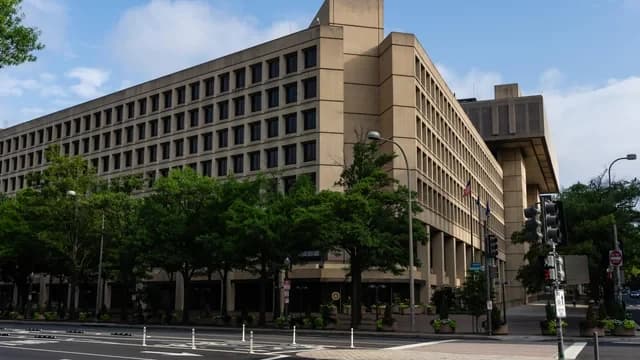
A federal judge has blocked the Trump administration’s effort to move the FBI headquarters to the Ronald Reagan Building in Washington, D.C., ruling that the administration did not follow required federal procedures when attempting to reverse the previously approved relocation plan.
The decision preserves the plan to build a new FBI headquarters in Greenbelt, Maryland, which was selected during the Biden administration after a lengthy federal site-selection process. The ruling represents a significant setback for the Trump administration's effort to keep the bureau's headquarters in downtown Washington.
The administration had argued that renovating the Ronald Reagan Building would be faster and less expensive than constructing a new suburban campus. FBI Director Kash Patel and other officials said the existing federal building could provide operational and financial advantages compared with the Greenbelt project.
Maryland and Prince George’s County challenged the decision in court, arguing that the administration could not abandon the approved Greenbelt project or redirect congressional funding without following the appropriate legal process. U.S. District Judge Theodore Chuang sided with Maryland officials.
Court Blocks Reagan Building Plan
The legal dispute centered on whether the Trump administration had the authority to overturn the earlier federal site-selection process and redirect funds intended for a new FBI headquarters.
The General Services Administration (GSA) selected Greenbelt, Maryland, in 2023 after reviewing potential locations in Maryland and Virginia. The selection followed years of debate over how and where the FBI should replace its aging headquarters in downtown Washington.
The current J. Edgar Hoover Building has faced longstanding criticism over aging infrastructure, security limitations and expensive maintenance requirements. Federal officials have spent more than a decade searching for a modern facility capable of meeting the bureau's operational and security needs.
The Trump administration subsequently proposed the Ronald Reagan Building as an alternative, arguing that reusing an existing federal property could reduce construction costs and allow the FBI to relocate more quickly.
Judge Chuang ruled that the administration could not simply abandon the approved Greenbelt plan and redirect congressional funding without complying with federal law. The ruling prevents the government from proceeding with the proposed Reagan Building renovation using funds designated for the FBI headquarters project.
Maryland Officials Welcome the Decision
Maryland officials and leaders in Prince George’s County welcomed the ruling as a major victory for the state and the Greenbelt project.
Maryland Attorney General Anthony Brown said the decision reinforced the principle that federal agencies must follow congressional requirements when making major decisions involving public funds. Supporters of the Maryland site have also emphasized the potential economic benefits of the project.
The planned Greenbelt headquarters is expected to bring significant investment and thousands of jobs to the region. Supporters argue that the project could generate economic development in an area that has historically received less federal investment than other parts of the Washington metropolitan region.
Transportation access was also among the considerations in selecting Greenbelt, with the location offering connections to public transportation and major regional infrastructure.
The FBI, however, has maintained that its priority is finding the headquarters arrangement that best serves the bureau's operational mission. Officials have argued that the Reagan Building option offers advantages that should not be dismissed.
FBI Headquarters Dispute Reflects Broader Government Power Struggle
The battle over the FBI headquarters reflects broader questions about federal construction, government spending and the balance between executive authority and congressional oversight.
The FBI has occupied the J. Edgar Hoover Building since the 1970s, but officials have long argued that the aging facility is no longer adequate for the bureau's modern security and operational requirements.
The Greenbelt proposal would create a purpose-built campus designed to consolidate FBI operations and provide modern security infrastructure. By contrast, the Reagan Building proposal would rely on an existing federal property and avoid much of the construction required for a new campus.
Supporters of the Reagan Building plan say reusing an existing facility could save taxpayers money and avoid years of construction. Critics argue that reversing the federal site-selection process undermines congressional authority and established government procedures.
The latest ruling resolves the immediate legal dispute in Maryland's favor but does not settle the larger question of where the FBI will ultimately establish its permanent headquarters.
Trump Administration Could Appeal
The Trump administration could appeal the ruling, potentially extending the dispute and delaying decisions about construction, funding and the bureau's eventual relocation.
An appeal would keep the future of the FBI headquarters uncertain while federal officials and Maryland leaders continue their competing efforts. The administration has maintained that the Reagan Building is a practical and financially responsible alternative, while Maryland officials insist that the Greenbelt selection was reached through a legally established process.
The case could ultimately become an important test of the limits of presidential authority to reverse major federal projects that have already gone through formal government procedures and received congressional funding.
For now, the federal court's decision keeps the Greenbelt, Maryland, headquarters project on track and blocks the proposed move to the Ronald Reagan Building. The FBI still faces the larger challenge of replacing its outdated headquarters, meaning the bureau's long-term future home will remain a subject of political and legal debate.
Sources: AP News, CBS News, Washington Times