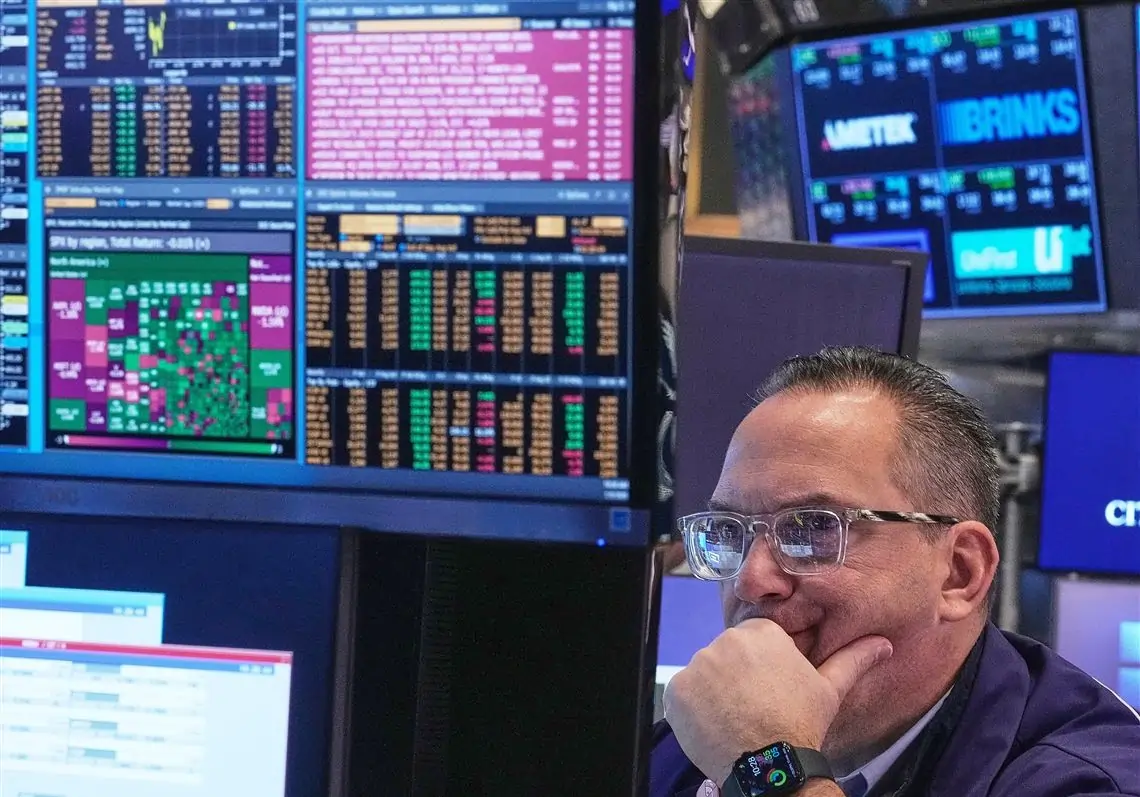
On Friday, U.S. stock markets are rising towards new all-time highs thanks to a mixed report on the job market in the U.S. The data suggests that the Federal Reserve might wait to cut interest rates again, but it doesn't completely rule out the possibility. This keeps investors cautiously optimistic.
The S&P 500 was up 0.5% by noon trading, getting closer to its record high from earlier in the week. The Dow Jones Industrial Average also went up 0.5%, gaining 237 points and moving closer to its own record. The Nasdaq composite rose by 0.7%, which is in line with a general rise in the market across major indices.
Mixed Job Numbers Make Investors Cautiously Hopeful
The rally came after the U.S. Labour Department said that employers hired fewer workers in December than economists had thought they would. The unemployment rate, on the other hand, got better than expected, which could mean that the job market in the US is entering a "low-hire, low-fire" phase.
This complicated picture means that the Federal Reserve could still decide not to cut interest rates, but it doesn't rule it out completely. Investors are trying to figure out if the Fed will keep rates steady because of the weaker hiring numbers or if other economic signs could still lead to rate cuts in the future.
CME Group data shows that traders now think there is only a 5% chance that the Federal Reserve will cut rates at its next meeting, down from 11% a day earlier. Still, many experts believe that there will be at least two rate cuts this year, which remains a bullish view in the markets.
Corporate Moves and Sector Highlights
Several sectors helped the market move higher. Vistra, a power company, saw its stock price rise 11.9% after announcing a 20-year deal to supply electricity to Meta Platforms from three of its nuclear plants. The agreement reflects a broader push by major tech firms to secure reliable and renewable energy sources as AI-driven data centers expand.
Oklo also posted a sharp gain, rising 12.3% after signing a deal with Meta to supply nuclear fuel for its Ohio-based project. The move underscores growing investor interest in nuclear energy as a clean and stable power source.
The housing sector also gained momentum after President Donald Trump announced a plan to lower mortgage rates through a proposed $200 billion purchase of mortgage bonds. Homebuilders responded positively, with Builders FirstSource up 8.5%, Lennar rising 5.1%, PulteGroup gaining 4.9%, and D.R. Horton climbing 4.8%.
Meanwhile, General Motors shares fell 3.3% after the company disclosed a $6 billion charge in the final quarter of 2025 tied to its pullback from electric vehicles. The move follows a $1.6 billion charge last quarter and reflects weakening demand amid reduced tax incentives and looser fuel-emission standards.
Broader Market Movements and Bonds
Treasury yields were mixed following the jobs report. The 10-year Treasury yield slipped from 4.19% to 4.17%, signaling cautious optimism about growth and inflation. The two-year Treasury yield, more sensitive to near-term Fed expectations, rose slightly from 3.49% to 3.52%.
Early data from the University of Michigan showed improved consumer confidence, particularly among lower-income households. Inflation expectations for the coming year dropped to their lowest level in a year, easing fears of a wage-price spiral.
Trends in the International Market
Global markets followed Wall Street higher, with gains across Europe and Asia. Japan’s Nikkei 225 climbed 1.6%, while France’s CAC 40 rose 1.3%.
Fast Retailing, the parent company of Uniqlo, surged 10.7% after reporting a 34% year-over-year increase in quarterly operating profit and raising its full-year outlook.
Conclusion
Despite mixed economic signals, stock markets continue to rally as investors bet that the Federal Reserve will maintain a steady policy stance in the near term. While employment data warrants caution, strong corporate earnings, improving consumer confidence, and potential policy shifts such as mortgage bond purchases are supporting optimism.
Uncertainty remains around the pace of future rate changes, inflation control, and global geopolitical developments. Still, Wall Street appears positioned to push higher as investors navigate these crosscurrents, with record highs potentially within reach in the coming weeks.