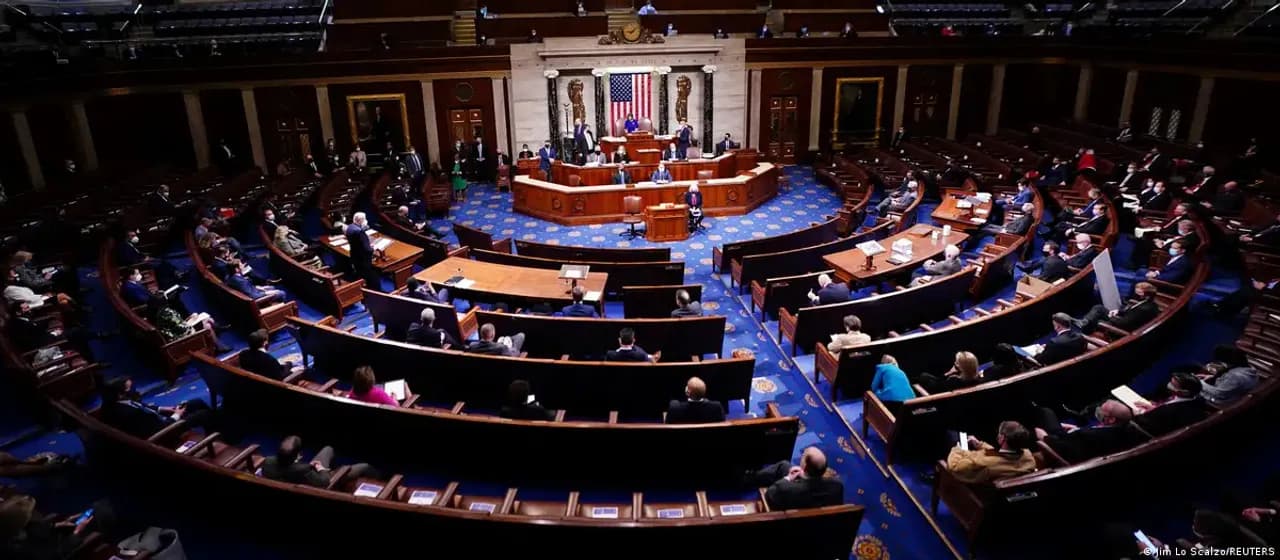
Senate Republicans voted against an effort Wednesday to put an end to President Donald Trump's war with Iran, expressing early support for a conflict that has rapidly extended across the Middle East with no clear US exit strategy. The measure, known as a war powers resolution, failed with a vote of 47 to 53.
The vote was primarily divided along party lines, with Republican Sen. Rand Paul of Kentucky voting in favor and Democratic Sen. John Fetterman of Pennsylvania voting against. The bipartisan legislation proposed by Democrat Tim Kaine and Republican Rand Paul would have mandated the withdrawal of US military from hostilities against Iran unless Congress authorized the campaign.
The resolution was intended to compel lawmakers to take a stand on whether the president needed seek congressional approval before launching more assaults. Democrats acknowledged that the legislation faced significant challenges, but said pushing members to take a public stance was critical.
The vote occurred five days into a quickly expanding confrontation that has already claimed the lives of Iran's supreme leader, Ayatollah Ali Khamenei, and numerous top officials, as well as the deaths of US Marines in an Iranian strike on a US facility in Kuwait.
Why This News Matters:
Even though there are still questions about how long the war with Iran could last and what the end goal is, this vote shows that Congress mostly supports President Trump. It also brings up a long-running argument in Washington about who should decide when the U.S. goes to war: the president or Congress. The stakes of that choice are getting higher because American troops are already dying.
Congressional Debate Over Presidential War Authority
The war powers resolution cited the 1973 War Powers Act, which was passed following the Vietnam War and permits Congress to demand votes on military interventions while limiting unauthorized conflicts to 60 days. The measure maintained that Congress had the exclusive authority to declare war.
Sen. Tim Kaine said the vote will make politicians publicly accountable for the repercussions of military action. "If you don't have the guts to vote 'Yes' or 'No' on a war vote, how dare you send our sons and daughters into war where they risk their lives?" Kaine said before the vote. Democrats believe that President Trump bypassed Congress when he launched the air campaign, and that administration officials have provided shifting excuses for the conflict.
Kaine stated that he got no proof in a confidential briefing that the US faced an impending threat from Iran. Despite their reservations, Republicans overwhelmingly supported the president. Sen. Susan Collins stated that approving the resolution would send the wrong message when US soldiers are already involved in combat operations.
Rising Casualties and Military Risks
The vote unfolded against the backdrop of a fierce battle, as American forces faced new threats. A drone strike in Kuwait over the weekend resulted in the deaths of six U.S. military personnel, highlighting the conflict's heavy cost in lives. Gen. Dan Caine, chairman of the Joint Chiefs of Staff, has cautioned that U.S. service troops are still in risk while battle continues.
Defense Secretary Pete Hegseth suggested the fighting could drag on for as long as eight weeks. He also acknowledged that Iran retains the ability to launch missile attacks, even as the United States works to establish control over the nation's airspace. Republican Senator Joni Ernst of Iowa emphasized that two of the troops slain on Sunday were from her state, and Iowa National Guard units had previously sustained deaths in previous area attacks.
"But now is our opportunity to bring an end to the decades of chaos," Ernst told the crowd. Trump has not ruled out deploying US ground forces and has stated that his goals range from damaging Iran's military capability to preventing the country from getting nuclear weapons.
Political Fallout and Debate in Congress
The House vote illustrates Washington's deepening political differences over the unfolding conflict. Senate Democratic Leader Chuck Schumer encouraged members to oppose the fight, saying Americans are tired of "forever wars" in the Middle East. Democratic Senator Chris Coons warned that intensifying the conflict might have unintended implications throughout the region.
Republican leaders backed the president's actions. Senator John Barrasso said that Democrats were trying to stop the administration's efforts instead of dealing with Iran's nuclear goals. After that, the talk turned to the House, where members began to think of more ways to deal with the ongoing crisis.
Brian Mast, the chair of the House Foreign Affairs Committee, said he supported Trump's actions. He argued that the president was simply fulfilling his constitutional duty to shield the country from an imminent threat. Democratic lawmakers, some of whom had served in Iraq and Afghanistan, voiced concerns about the potential human and financial toll of war. Rep. Jason Crow pointed out that political leaders often overlook the sacrifices made by service members and their loved ones when they advocate for military intervention.