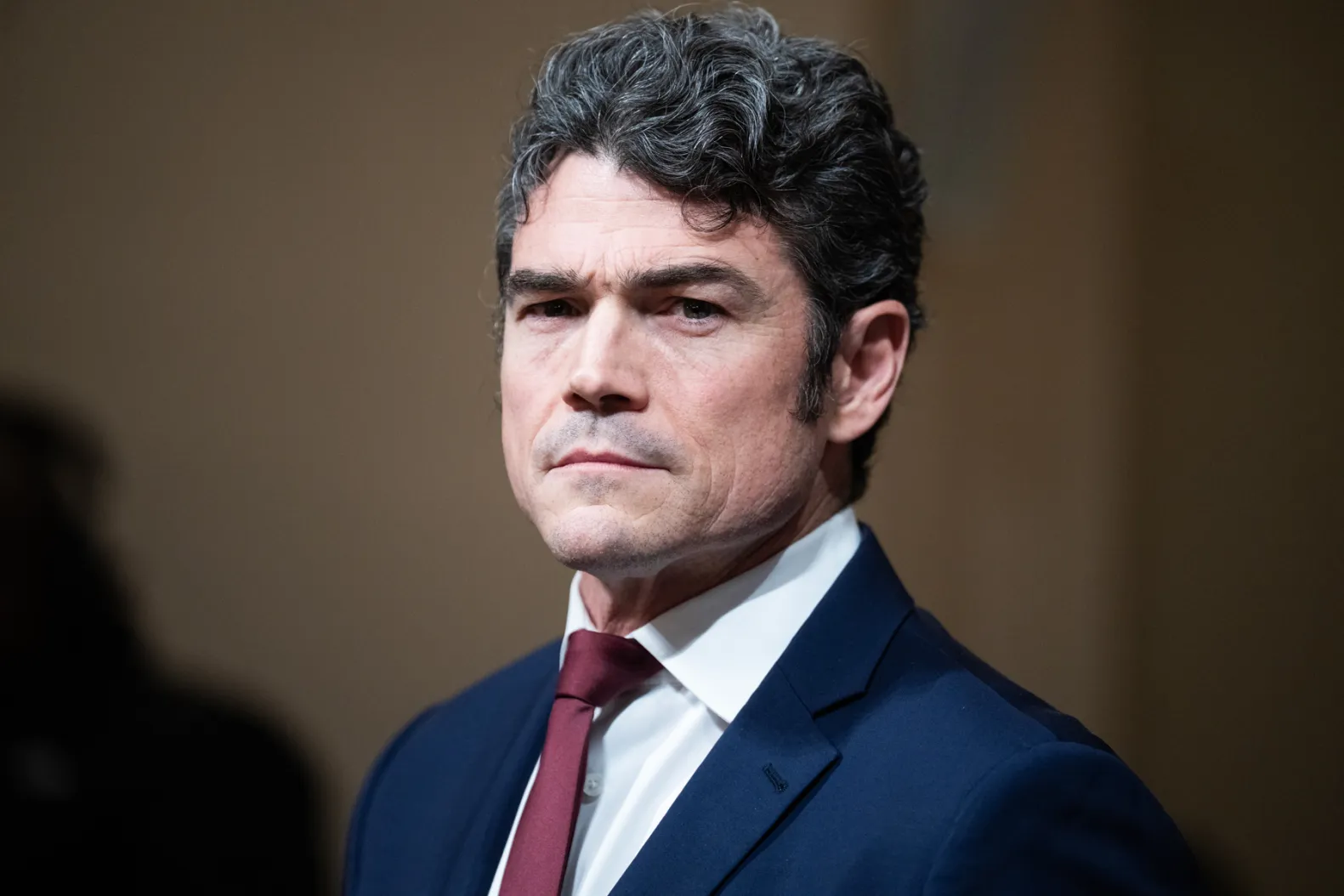
Joe Kent, the director of the National Counterterrorism Center, announced his resignation on Tuesday, expressing deep concerns about the justification for military action in Iran and stating that he "cannot in good conscience" support the Trump administration's war.
Kent, a senior counterterrorism official under President Donald Trump, stepped down in protest, urging the administration to reconsider its strategy. He is the first high-ranking official to resign over the Iran conflict, signaling internal divisions within the administration.
"I cannot in good conscience support the continued conflict in Iran. Iran posed no urgent threat to our country," Kent said in a letter shared publicly. He also suggested that external political pressure influenced the decision to initiate the conflict.
His departure highlights growing unease within parts of the administration and broader political circles, especially as concerns about terrorism and national security remain elevated in the United States.
Why This News Matters
This resignation is more than a routine political shift—it reflects internal dissent at the highest levels of national security leadership. When a top counterterrorism official publicly questions the justification for war, it raises broader concerns about decision-making, transparency, and public trust in government policy.
It also reignites debate over whether the conflict with Iran was necessary, and whether intelligence assessments were accurately represented to both policymakers and the public.
Dispute Over Iran Threat and War Justification
In his resignation letter, Kent directly challenged the administration’s reasoning for the strikes against Iran. He stated that there was no credible evidence of an imminent threat to the United States.
"It is clear that we started this war under external pressure," Kent wrote, arguing that the decision conflicted with the administration’s stated foreign policy principles.
He further claimed that misinformation from various sources contributed to the perception of an urgent threat, calling into question the intelligence used to justify military action.
Kent also referenced his own military service and personal loss, emphasizing that he could not support sending Americans into a conflict he believed was unjustified.
Trump Administration Pushback and Official Response
President Donald Trump dismissed Kent’s concerns, stating that he had always viewed him as "weak on security." He reaffirmed his belief that Iran posed a serious and immediate threat.
White House Press Secretary Karoline Leavitt rejected Kent’s claims, calling them "insulting and laughable," and insisted that the president acted on strong intelligence indicating imminent danger.
Director of National Intelligence Tulsi Gabbard defended the administration’s decision, stating that the president had carefully reviewed intelligence before authorizing military action.
House Speaker Mike Johnson also supported the administration, warning that delaying action could have resulted in significant loss of life.
Political Reactions and Controversy
Kent’s resignation sparked mixed reactions across the political spectrum. Some Democrats said his concerns about the war were valid, even if they had previously opposed his appointment.
Senator Mark Warner stated that there was no credible evidence of an imminent threat from Iran, aligning with Kent’s assessment.
However, other leaders strongly criticized Kent’s remarks. The Anti-Defamation League condemned parts of his statement, while Senate Republican leader Mitch McConnell rejected rhetoric he described as harmful.
Meanwhile, Representative Marjorie Taylor Greene defended Kent, calling him a patriot and praising his service.
The response underscores deep divisions in Washington over the war and its justification.
Background on Kent and His Career
Joe Kent is a former Green Beret and CIA officer who was confirmed to lead the National Counterterrorism Center in July by a narrow Senate vote. In this role, he oversaw efforts to track and prevent terrorist threats.
He served multiple combat missions before transitioning to intelligence work. His personal story—including the loss of his wife, a Navy cryptologist killed in Syria—resonated with many supporters.
Before joining the administration, Kent ran unsuccessfully for Congress in Washington state and faced scrutiny over past political associations.
Despite controversy, his background in counterterrorism made him a prominent figure in national security circles.
What to Watch Next
Kent’s resignation could mark the beginning of broader scrutiny within the administration. If additional officials speak out or lawmakers push for further investigation, the issue could escalate into a larger political and policy debate.
Future developments will likely depend on how the administration responds and whether new information about the conflict emerges. The situation may significantly influence public opinion and confidence in national security decisions moving forward.