France, Germany, and the United Kingdom announced on Sunday that they were prepared to defend their interests and those of their Gulf allies by taking "defensive action" against Iran if required. In a joint statement, the three countries said they were "appalled by Iran's indiscriminate and disproportionate missile attacks launched against countries in the region, including those who were not involved in the initial U.S. and Israeli military operations."
The leaders stated that Iran's attacks were endangering allied servicemen and civilians and urged Tehran to stop immediately. They warned that they could take "necessary and proportionate defensive action" to disrupt Iran's ability to launch missiles and drones at their source, and that they would collaborate with the US and regional partners.
Following the joint US-Israeli operation, Iran conducted missile and drone strikes around the region, targeting US positions. Attacks targeted a multinational base near Arbil in Iraq and a German army camp in Jordan, but no deaths were recorded. Iranian President Masoud Pezeshkian described the assassination of Ayatollah Ali Khamenei as a declaration of war, claiming Iran has a legitimate right to retaliate.
Why This News Matters:
Europe is no longer just looking in from the outside. When powerful countries like France, Germany, and the UK say they're ready to use military force, it makes it more likely that the fight will spread beyond the U.S.–Iran–Israel fight and become a bigger international conflict. At the same time, their push for diplomacy shows how important it is for the safety of civilians, the stability of the world, and the energy markets in the area.
United Kingdom Expands Military Role and Supports U.S. Operations
Britain has hinted at the potential for strikes on Iran, vowing to work alongside its American allies in the Middle East. Prime Minister Keir Starmer has approved the United States' request, signaling the UK's consent. This would involve utilizing British military facilities for restricted defensive strikes targeting Iranian missile stores or launchers, all aimed at mitigating regional threats. He emphasized that Britain was not participating in the original offensive and would not participate in offensive action, but that British planes were already operating in the area.
The United Kingdom officially entered the conflict when a Royal Air Force fighter jet shot down an Iranian drone headed into Qatar. Defence Secretary John Healey reported that two Iranian missiles appeared to be headed towards Cyprus, home to UK bases, before ultimately splashing down in the sea.
Officials said the rockets did not appear to be purposely targeting British installations.Iran's wider strategy has involved assaults throughout the Middle East. Reports indicate explosions in multiple cities, alongside damage to civilian infrastructure.
Regional Escalation and Intensifying Conflict Environment
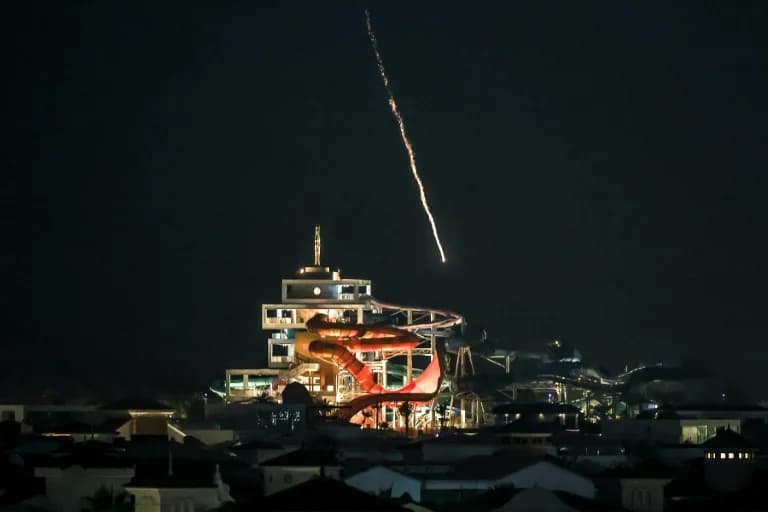
Iran's Revolutionary Guards launched a massive onslaught, with explosives heard in Riyadh, Dubai, Abu Dhabi, Doha, Manama, Jerusalem, and Tel Aviv. Israeli emergency agencies claimed that at least nine individuals were killed in Beit Shemesh. Iran's Foreign Minister, Abbas Araghchi, stated that the country will defend itself without limitations, saying, "We are defending ourselves whatever it takes."
Iranian strikes have targeted US, French, and partner military targets in response for the joint US-Israeli war. European officials voiced their concerns, labeling Iran's maneuvers as perilous, threatening nations uninvolved in the initial attacks. The E3 leaders issued a warning, stating that any further escalation could undermine both regional stability and global security.
The recent developments have put European nations under considerable strain. They're now juggling two difficult tasks: backing America's defensive efforts while also trying to keep the conflict from spreading across the Gulf and beyond.
Calls for De-escalation and Return to Nuclear Negotiations
After the strikes, Germany, France, and the United Kingdom's leaders pressed the Trump administration to restart talks with Tehran, pushing for a diplomatic resolution. The trio clarified that they hadn't participated in the initial attacks. However, they remained in constant contact with the US, Israel, and other regional allies, reiterating their dedication to protecting civilian lives and maintaining regional stability.
They restated long-standing demands that Iran abandon its nuclear program, curtail ballistic missile development, and cease destabilizing regional activities. European leaders criticized Iran's retaliatory assaults and appealed for moderation, encouraging Tehran to restart talks. Officials underlined that indirect US-Iran talks had taken place in Geneva days earlier, and Iran described them as the most heated ever.
French President Emmanuel Macron cautioned that the escalation would have serious ramifications for international peace, and that the continued conflict was hazardous for everyone and must end.