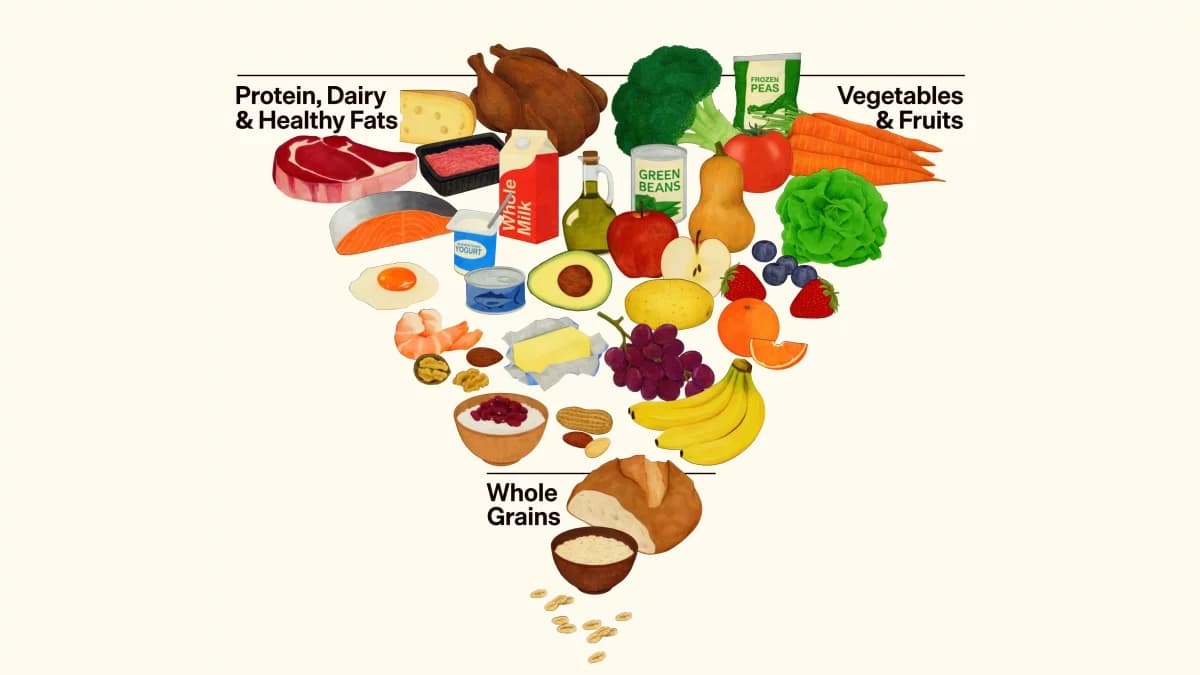
On January 7, the Trump administration released new dietary guidelines for Americans. These guidelines stress eating more protein and less sugar and highly processed foods. The new recommendations also include less strict advice on drinking alcohol and stress the possible health benefits of red meat, dairy, and butter. These are positions that have worried many health experts.
A Move Toward “Real” Food and Eating More Protein
Robert F. Kennedy Jr., the Secretary of Health and Human Services in the U.S., said that the new guidelines include a new, upside-down food pyramid that puts protein, dairy, healthy fats, vegetables, and fruits at the top. Kennedy stressed that the main goal of these guidelines is to promote “real” food. He said that they are very important for health, the economy, and military readiness. Kennedy said at a press briefing at the White House, “Nothing matters more for health outcomes.”
Kennedy’s personal views on nutrition are reflected in the new guidelines, which are in line with his Make America Healthy Again movement. They strongly advise Americans to limit highly processed foods, which are foods that have a lot of refined carbohydrates, added sugars, sodium, unhealthy fats, and chemical additives. However, the guidelines do not give a clear definition of what these foods are.
More Focus on Proteins and Fats From Animals
One big change is that people are now being told to eat more protein, including from animal sources like red meat, poultry, and eggs. This is different from what they were told before, which was to eat less. The rules also say that you should eat full-fat dairy products and cook with butter and beef tallow. Earlier dietary guidelines said to limit these foods because they are high in saturated fats, which are bad for heart health.
There have been mixed results from studies on saturated fats, but many of them suggest that eating too much of them can raise the risk of heart disease. Kennedy and other Trump officials have said that saturated fats have been unfairly demonized and are important parts of a healthy diet. Kennedy said, “We are ending the war on saturated fats,” which was a change from years of dietary advice.
Even though there are signs that the rules are getting less strict, the new guidelines still say that saturated fat should make up no more than 10% of daily calories. This is a long-standing recommendation that is still in place.
Experts and Health Groups Raise Concerns
Nutritionists and health groups had different things to say. Marion Nestle, a retired professor at New York University who studied nutrition and public health, said that the guidelines were confusing. She said that eating more meat and full-fat dairy would make it hard to stay within the 10% saturated fat limit and keep a balanced calorie intake, since fats have twice as many calories per gram as proteins and carbohydrates.
The American Heart Association (AHA) is worried about the advice about protein because it says that saturated fats should only make up 6% of daily calories. The AHA stressed the importance of lean meats, seafood, and plant-based proteins. They also warned against eating a lot of red meat, butter, lard, and tallow because they are linked to a higher risk of heart disease. The group asked for more scientific research to find the best sources and amounts of protein for health.
Support for Cutting Back on Processed Foods and Sugar
Many health experts liked that the guidelines focused on eating less sugar and processed foods. Dr. Bobby Mukkamala, president of the American Medical Association, praised the new guidelines for making it clear how dangerous sugary drinks, too much sodium, and processed foods are for people with chronic diseases like heart disease, diabetes, and obesity.
Warnings Against Broad Claims About Processed Foods
But some experts said that you should not throw away all processed foods. Dr. Neal Barnard, president of the Physicians Committee for Responsible Medicine, said that some processed foods can be good for you and have important nutrients added to them. He said that the guidelines were bad because they pushed meat and dairy, which he said are major causes of diabetes, heart disease, and obesity.
Barnard said that processed foods that are high in vitamins and plant-based can lower the risk of cancer, heart disease, diabetes, and birth defects. This means that the strict rules against processed foods may not consider the possible benefits of choosing them wisely.
The Future Impact of the New Guidelines
Every five years, the Dietary Guidelines for Americans are updated. In 2030, there will be another update. These new rules affect federal nutrition programs like SNAP (Supplemental Nutrition Assistance Program) and the National School Lunch Program, which set dietary standards for millions of Americans.
Recent changes reflect an intense debate over nutrition science, industry influence, and public health priorities. While some experts welcome the emphasis on reducing sugar and processed foods, others worry that encouraging red meat, dairy, and saturated fats could undermine efforts to reduce chronic disease. With experts divided, the guidelines are likely to remain at the center of the national conversation about healthy eating in the United States.