LAS VEGAS — At the annual CES show, health tech gadgets showcase bold promises: a smart scale that scans your feet to gauge heart health, and an egg-shaped hormone tracker that uses AI to help determine the best time to conceive. Yet experts caution that accuracy remains uncertain and privacy risks loom, especially as regulators loosen to foster AI innovation.
Regulatory Shifts and Growing AI Adoption
This year the U.S. Food and Drug Administration signaled a shift by relaxing regulations on “low-risk” general wellness devices such as some heart monitors and mobility aids. The move comes as the White House reduces guardrails around AI, and the Department of Health and Human Services outlines strategies to expand AI’s role in health care. The changes raise questions about how consumer devices might affect medical decisions and patient data.
Promises and Pitfalls of AI Health Technology
CES booths highlighted tools aimed at widening access to care in rural areas, accelerating women’s health research, and assisting people with disabilities. While AI can enhance processing of medical images and help clinicians manage crowded schedules, experts warn about biases and a phenomenon known as “hallucination,” where AI may present incorrect information as fact.
Privacy Risks and Data Concerns
Privacy advocates caution that consumer devices often fall outside the protections of HIPAA, leaving data vulnerable to use in training AI models or even sale to third parties. Cindy Cohn, executive director of the Digital Frontier Foundation, stresses that much of what appears at CES is difficult to trace in terms of data destinations, noting that consumers must sift through complex terms to understand who has access to their information—and that this isn’t fair to those who rely on such devices.
Manufacturers Defend Safeguards
Manufacturers, meanwhile, defend privacy safeguards and highlight the benefits of filling care gaps. Sylvia Kang, founder and CEO of Mira, described her egg-shaped hormone tracker as a “world’s mini hormone lab.” Users dip a urine-testing wand into the device, then review results in an app. Kang says data are stored in the cloud, and she asserts it’s not shared with others.
Women’s Health Takes Center Stage
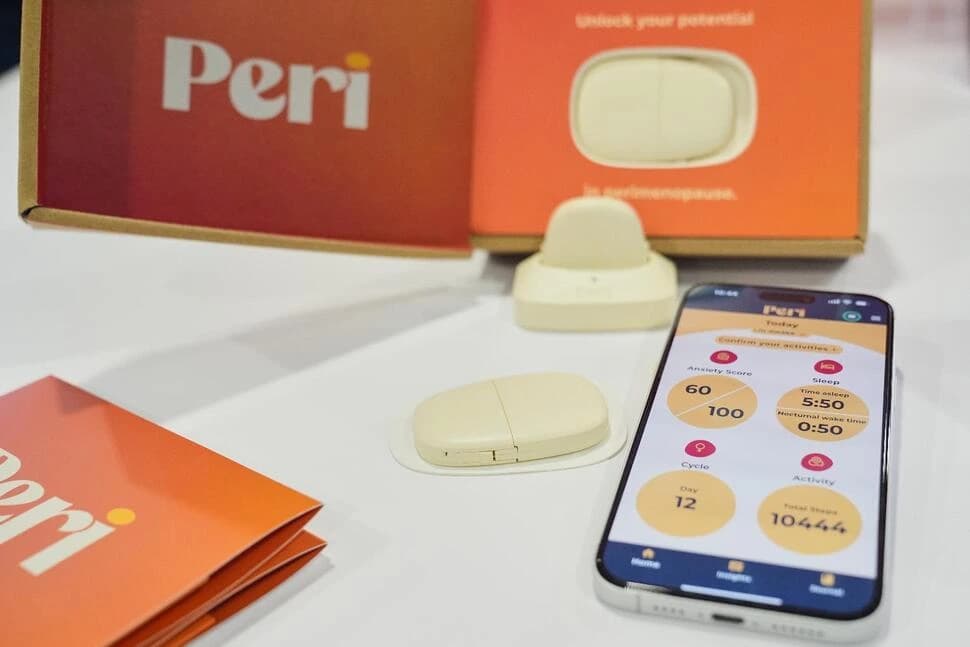
Women’s health dominated much of the conversation, reflecting decades of underfunding and limited research in areas like menopause. “Everyone will experience menopause, but there’s still little known about it,” said Amy Divaraniya, founder of the women’s health company Oova. Innovations like Peri, a wearable that tracks hot flashes and night sweats, aim to translate the experience into actionable data.
AI Tools for Information Access
Beyond reproductive health, health-focused AI tools touted at CES aim to improve information access in areas with doctor shortages. The free AI chatbot 0xmd, for example, offers medical information and can translate and interpret doctors’ notes, while taking photos of moles or rashes for preliminary assessment. The goal, its founder Allen Au says, is to provide a second opinion rather than a substitute for a clinician. OpenAI also announced ChatGPT Health during the event, signaling a growing intersection between consumer AI and medical information.
A Call for Balance and Caution
Experts urge a balanced view: these are tools to help people engage with their health and prepare informed questions for professionals, not replacements for medical judgment. “People need to remember that these are tools; they’re not oracles delivering truths,” Cohn cautions. As regulation evolves, careful attention to accuracy, safety, and privacy will be essential for turning innovation into real health benefits.