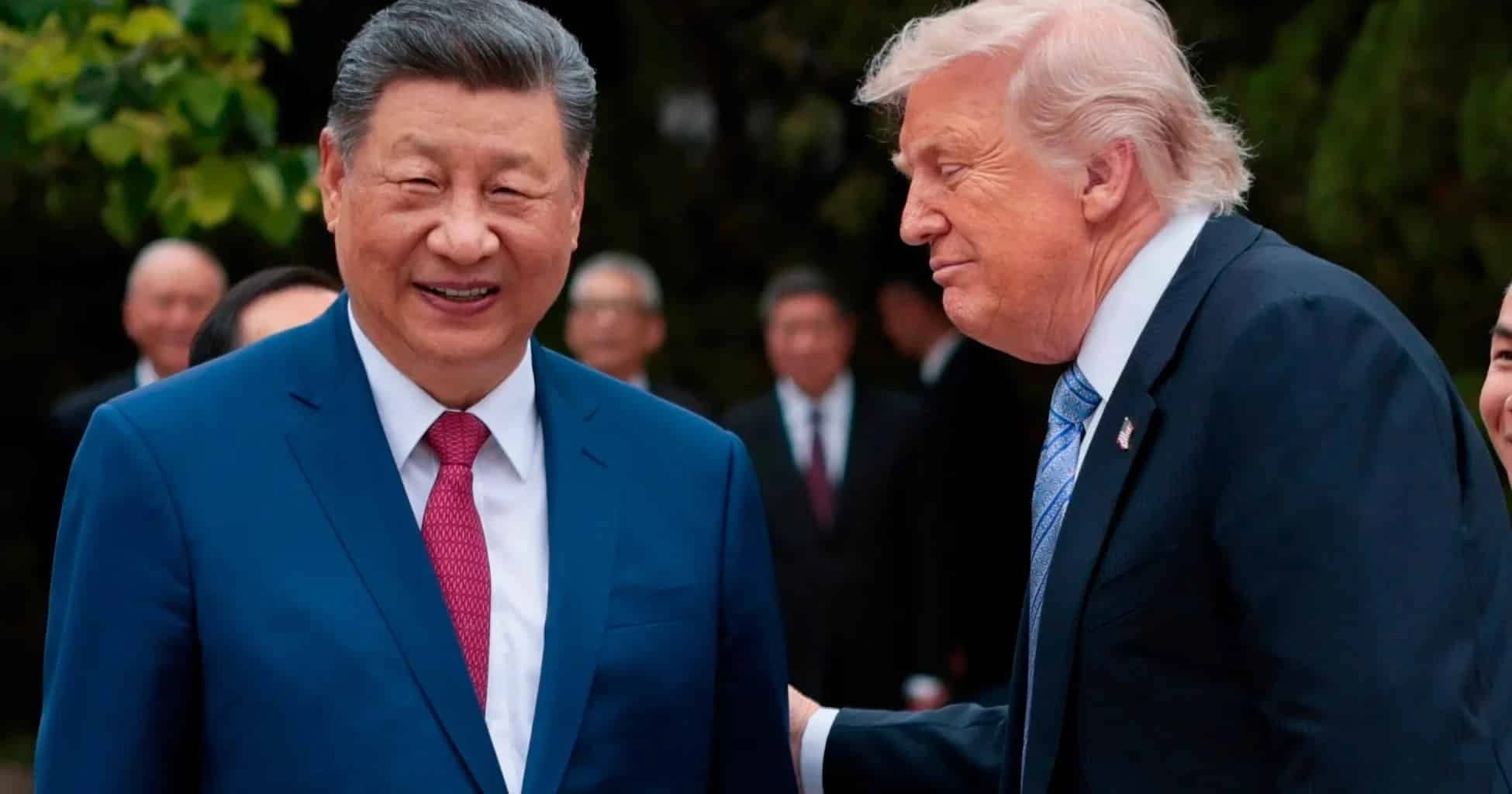
China agreed to dramatically increase purchases of American agricultural products following President Donald Trump’s summit with Chinese President Xi Jinping in Beijing, marking one of the most significant trade developments between the two countries in years.
The White House announced that China will buy at least $17 billion worth of U.S. agricultural goods annually from 2026 through 2028. The agreement includes major purchases of soybeans, beef, poultry, corn, and other agricultural products that were heavily affected during previous trade disputes between Washington and Beijing.
American farmers had faced severe export declines after China imposed retaliatory tariffs during Trump’s earlier trade war policies.
According to the White House fact sheet referenced in Bloomberg and Reuters reports, the agreement does not include separate soybean purchase commitments China previously made in late 2025. Even so, officials described the new arrangement as one of the largest agricultural trade commitments ever negotiated between the two countries.
China also agreed to restore access for U.S. beef and poultry products from states certified free of bird flu outbreaks. Numerous American meat export licenses that had previously expired are now expected to be reinstated under the new arrangement.
The agreement emerged directly from the Trump-Xi summit held in Beijing, where both leaders attempted to stabilize economic relations amid ongoing geopolitical tensions involving tariffs, technology restrictions, Taiwan, and the Iran conflict.
American agricultural groups welcomed the announcement, arguing the expanded exports could provide major financial relief to farmers who suffered large losses during earlier trade disputes with China.
Soybeans, Beef, and Poultry Become Central to New Trade Deal
Soybeans once again became the centerpiece of U.S.-China agricultural trade negotiations as Beijing pledged to sharply increase imports from American farmers. China reportedly committed to purchasing up to 25 million metric tons of U.S. soybeans annually under the agreement.
Soybean exports have remained one of the most politically sensitive issues in the U.S.-China trade relationship because American farmers were among the hardest-hit groups during earlier tariff battles. China had drastically reduced dependence on U.S. soybeans after shifting purchases toward Brazil and other suppliers.
The new commitments therefore represent a major effort to restore agricultural trade flows that collapsed during previous disputes. Reports noted that U.S. agricultural exports to China fell more than 65% in 2025 from 2024 due to tariffs and geopolitical tensions.
Beef and poultry exports also were key pillars of the agreement. China will resume purchases from U.S. producers in areas certified to be free of avian influenza outbreaks, reopening significant export markets for U.S. meat producers.
In return, the United States reportedly agreed to address Chinese concerns on seafood, dairy, and other export restrictions affecting Chinese producers. The two sides also discussed selective tariff cuts on some agricultural and industrial products.
The agreement carries major political significance for Trump, whose administration has repeatedly emphasized support for American farmers while simultaneously pursuing aggressive trade policies toward China.
The White House described the agricultural purchases as evidence that Trump’s negotiating strategy is producing results.
The restoration of agricultural trade also reflects broader efforts by both governments to prevent worsening economic instability while global markets remain under pressure from inflation and geopolitical tensions.
New Trade and Investment Boards Aim to Stabilize Relations
Alongside the agricultural agreement, the United States and China also announced plans to establish new bilateral trade and investment boards designed to improve communication and manage future economic disputes.
The newly announced Board of Trade and Board of Investment are intended to oversee non-sensitive commercial issues, encourage investment discussions, and reduce trade barriers between the world’s two largest economies.
The White House described the boards as “the cornerstone” of the new agreement reached during the Beijing summit, aimed at preventing future trade conflicts from escalating.
Chinese officials emphasized maintaining “strategic stability” in economic relations with Washington despite continuing disagreements involving technology, Taiwan, and military competition in the Indo-Pacific.
Reports also indicated the broader agreement may include expanded U.S. sales of aircraft engines, aviation components, and medical technology to China.
Still, analysts warn that major tensions between Washington and Beijing remain unresolved, particularly over semiconductors, artificial intelligence, and Taiwan policy.
However, the creation of formal trade and investment mechanisms signals an attempt to reduce the risk of uncontrolled economic confrontation.
Farmers and Markets React to Major Trade Breakthrough
The agreement immediately generated strong reactions across agricultural markets and farming communities throughout the United States.
Soybean futures and several agricultural commodity prices moved higher after reports of China’s expanded purchase commitments emerged.
American farmers have spent years struggling with the economic effects of trade disputes between Washington and Beijing, particularly soybean producers who suffered billions in losses.
Analysts noted that China remains the world’s largest importer of soybeans, making this agreement highly significant for U.S. agriculture.
At the same time, some experts cautioned that China has not always fully met past purchase commitments, raising uncertainty about long-term fulfillment.
Still, investors viewed the agreement as a positive signal of renewed cooperation between the two economic superpowers.
The deal stands out as one of the clearest outcomes of the Trump-Xi summit and may have lasting implications for global agricultural trade flows.