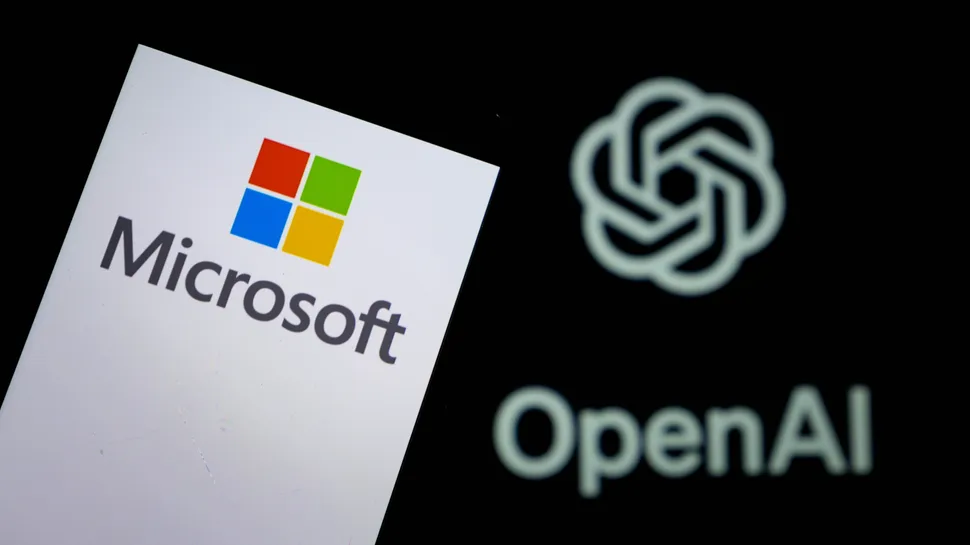
Microsoft has introduced a new family of artificial intelligence models, signaling a broader effort to reduce its reliance on OpenAI while lowering the soaring costs of delivering AI services.
The announcement came during the company’s Build 2026 developer conference. Executives presented the new models as a key step in expanding Microsoft’s in-house AI capabilities and giving developers more flexibility across its software ecosystem.
The timing is notable. Microsoft remains one of OpenAI’s largest investors and infrastructure partners. Yet the company is increasingly building technology that can operate without OpenAI’s models. That shift reflects a growing reality across the AI industry: dependence carries risks, even among close partners.
According to CNBC, the newly introduced models are designed to improve efficiency and reduce computing expenses compared with some of the larger AI systems currently dominating the market.
Those costs have become impossible to ignore. Running advanced generative AI services requires massive investments in data centers, chips and cloud infrastructure. As demand continues climbing, technology companies face mounting pressure to find cheaper and more scalable alternatives.
Microsoft’s answer appears straightforward. Build more of its own technology. Use less computing power. Maintain competitive performance.
The strategy could give the company greater control over pricing, product development and long-term planning while reducing reliance on external providers.
AI Efficiency Is Becoming the Industry’s New Battleground
For years, the AI race revolved around one question: who could build the largest model?
That conversation is changing.
Microsoft’s announcement placed efficiency at the center of the discussion. The company said its new models are designed to consume fewer resources while still delivering strong performance for many business and productivity tasks.
The focus reflects a growing challenge facing the entire industry.
Large language models require enormous amounts of electricity, specialized hardware and cloud infrastructure. Training costs grab headlines. Operating costs may prove even more important.
Analysts increasingly point to inference costs — the expense of running AI systems after they are trained — as one of the biggest economic challenges facing the sector.
Microsoft believes smaller and more specialized models can help address that problem.
Instead of relying exclusively on massive general-purpose systems, companies are increasingly developing targeted models optimized for specific tasks. These systems are often faster, less expensive and still very effective within defined business environments.
The approach could be particularly attractive for enterprise customers seeking AI capabilities without absorbing massive infrastructure expenses.
For many businesses, performance matters. Cost matters more.
Industry observers say the competition is evolving beyond raw model size. Companies are now fighting over affordability, scalability and real-world deployment. Microsoft wants to be at the center of that shift.
Build 2026 Reinforces Microsoft’s Vision for AI-Powered Windows
The new AI models were only part of Microsoft’s message at Build 2026.
The company also outlined a series of tools, APIs and platform upgrades designed to strengthen Windows as a development environment for AI-powered applications. According to Microsoft’s developer blog, executives emphasized deeper AI integration across both Windows devices and Azure cloud services.
The goal is ambitious.
Microsoft wants developers building the next generation of AI applications to remain inside its ecosystem from start to finish.
Executives highlighted improvements involving local AI processing, developer tools and stronger connections between cloud-based AI services and on-device computing capabilities. The company argued that Windows remains a trusted platform for creating, deploying and managing AI applications at scale.
Security played a prominent role in the discussion as well.
As generative AI continues to become more embedded in business operations, enterprise customers are still raising questions around data protection, governance and reliability. Microsoft positioned Windows and Azure as platforms capable of addressing those concerns while supporting large-scale AI deployment.
The message was clear. Microsoft does not view AI as a separate product category. It views AI as a layer that will increasingly sit across every part of its software ecosystem.
Build 2026 offered another glimpse of how aggressively the company is pursuing that vision.
Microsoft’s Evolving Relationship With OpenAI Draws Attention
The announcement also renewed discussion about Microsoft’s changing relationship with OpenAI.
The partnership remains one of the most influential alliances in the technology industry. Microsoft has invested tens of billions of dollars in OpenAI and continues providing the cloud infrastructure that powers many of its operations.
That relationship is not disappearing.
It is becoming more complicated.
Over the past several years, OpenAI’s models have become deeply integrated into Microsoft products including Copilot, Azure AI services and productivity software. Those integrations helped position Microsoft as one of the biggest winners of the generative AI boom.
Dependence, however, can create strategic limitations.
Owning its own models allows Microsoft greater control over pricing, deployment and customization of products while reducing the risk of supply constraints or future disputes in a fast-changing industry.
Analysts increasingly describe the relationship between Microsoft and OpenAI as a mix of collaboration and competition. The two companies remain closely connected. They are also pursuing overlapping ambitions in several areas of the AI market.
That dynamic is becoming more common across the technology sector. Partnerships formed during the early stages of the AI boom are evolving as companies seek greater independence and stronger competitive positions.
Microsoft’s latest announcement reflects that reality.
The company continues investing heavily in OpenAI. At the same time, it is building the infrastructure, models and developer ecosystem needed to stand on its own if necessary.
Build 2026 made one thing clear: Microsoft intends to remain a dominant AI platform provider regardless of how the broader industry evolves.