According to several international media outlets citing reports by Reuters, earlier this year, during the regional war between Iran, Israel and the United States, Saudi Arabia secretly launched retaliatory airstrikes on Iranian territory. If confirmed, the operations would represent the first known direct Saudi military strikes ever conducted on Iranian soil.
The strikes were reportedly launched in late March after Iran and allied groups carried out repeated drone and missile attacks against Saudi infrastructure, including airports, oil facilities, and military targets. Two Western officials and two Iranian officials told Reuters the Saudi response was intended as direct retaliation — essentially a warning that continued attacks on the kingdom would no longer go unanswered.
What makes the story especially striking is not just the military action itself, but how quietly it was handled.
Publicly, Saudi Arabia continued talking about diplomacy and de-escalation. Privately, according to the reports, it was already preparing to strike back.
The Middle East Came Dangerously Close to a Much Larger War
The broader conflict began after large-scale U.S. and Israeli strikes against Iran earlier this year triggered waves of retaliation across the region. What initially looked like a confrontation centered on Iran and Israel gradually expanded into something much wider and more unpredictable.
Soon, Gulf states were being pulled in directly.
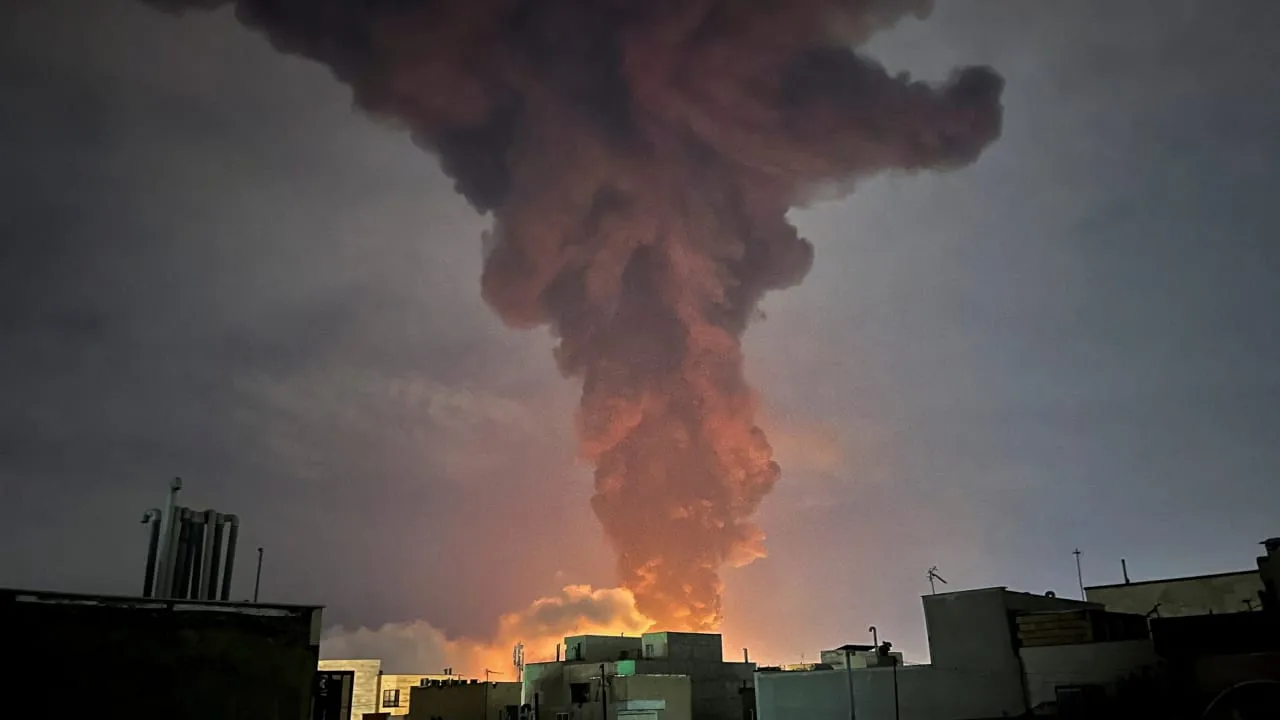
Reports say Saudi Arabia has come under multiple missile and drone attacks on oil facilities, airports, military bases and civilian sites. One of the most alarming incidents involved strikes near the Ras Tanura refinery — one of the kingdom’s most important energy facilities and a critical part of global oil markets.
Every new attack increased fears that the region was drifting toward a full-scale regional war. Oil markets panicked. Shipping companies worried about the Strait of Hormuz. Governments across the Gulf quietly raised military readiness levels.
Behind the scenes, according to Reuters, Saudi Arabia and several Gulf allies warned Tehran that if attacks continued, they would retaliate directly.
The reported airstrikes suggest Riyadh eventually decided those warnings needed to become real.
Saudi Arabia Appears to Be Changing Its Military Posture
For decades, Saudi Arabia largely depended on the United States as its primary security shield against Iran.
But over recent years, especially after attacks on Saudi oil facilities in 2019 exposed vulnerabilities in the kingdom’s defenses, Saudi leaders have increasingly faced criticism at home and abroad for appearing too dependent on American military protection.
The alleged covert strikes suggest something important may be changing: Saudi Arabia appears more willing to act independently and directly when it believes its territory or economy is under threat.
That does not necessarily mean Riyadh wants a full war with Iran. In fact, the reports suggest the opposite. Saudi Arabia was simultaneously pursuing backchannel diplomacy with Tehran while carrying out retaliatory operations.
That balancing act says a lot about how Gulf governments now view regional security.
The strategy seems to be: show strength loudly enough to deter future attacks, but avoid escalating so publicly that the entire region spirals into uncontrollable war.
Diplomacy and Retaliation Happened at the Same Time
One of the most revealing parts of the reporting is how Saudi Arabia apparently tried to combine military pressure with quiet diplomacy.
According to Reuters, Saudi officials communicated privately with Iran throughout the conflict, warning that continued attacks would trigger stronger retaliation while also signaling they still wanted to avoid prolonged war.
At one point, reports said Iran and allied groups launched more than 100 attacks against Saudi Arabia within a single week. The intensity reportedly pushed Riyadh closer to direct military escalation than at any time in recent years.
But after the covert strikes and diplomatic warnings, the number of attacks reportedly declined sharply.
That outcome may reinforce a growing belief among Gulf leaders that deterrence alone is no longer enough unless backed by a demonstrated willingness to strike directly when necessary.
The Entire Gulf Security System May Be Evolving
What makes these reports so important strategically is that they hint at a broader transformation happening across the Gulf region.
For years, countries like Saudi Arabia and the United Arab Emirates generally tried to avoid direct military confrontation with Iran whenever possible, often relying instead on alliances, proxy forces, diplomacy, or American intervention.
Now that may be changing.
Analysts cited in the reports believe Gulf powers are becoming more willing to carry out direct cross-border operations themselves — especially as drone warfare, missile attacks, and maritime disruption become central features of regional conflict.
The war also exposed how vulnerable modern economies are to regional instability. Attacks on oil facilities, shipping routes and energy infrastructure can have immediate effects on global markets, fuel prices and international trade.
That reality is pushing Gulf governments to rethink what deterrence actually means in an era where relatively cheap drones and missiles can threaten trillion-dollar economies.
The Region Still Feels Dangerously Fragile
Even though open warfare has cooled somewhat, the atmosphere across the Middle East remains tense and uncertain.
Ceasefire talks between Iran, the United States and regional mediators are tenuous. Tensions around the Strait of Hormuz continue affecting global energy markets. And governments across the Gulf still fear that another escalation could spiral much faster than anyone can control.
What these reports ultimately reveal is how close the region may have come to a much wider war — and how much of that confrontation unfolded quietly, through covert operations, private warnings, and hidden retaliation that the public never saw in real time.
If the Reuters reporting is accurate, Saudi Arabia crossed a line earlier this year that would have seemed almost unthinkable not long ago: directly striking inside Iran itself.
Sources
- REUTERS: https://www.reuters.com/world/asia-pacific/saudi-arabia-launched-covert-attacks-iran-regional-war-widened-sources-2026-05-12/
- TIMES OF INDIA: https://timesofindia.indiatimes.com/world/middle-east/saudi-arabia-launched-secret-retaliatory-airstrikes-on-iran-during-regional-war-report/articleshow/131054413.cms
- THE TIMES OF ISRAEL: https://www.timesofisrael.com/saudi-arabia-covertly-launched-strikes-on-iran-during-war-sources-say/