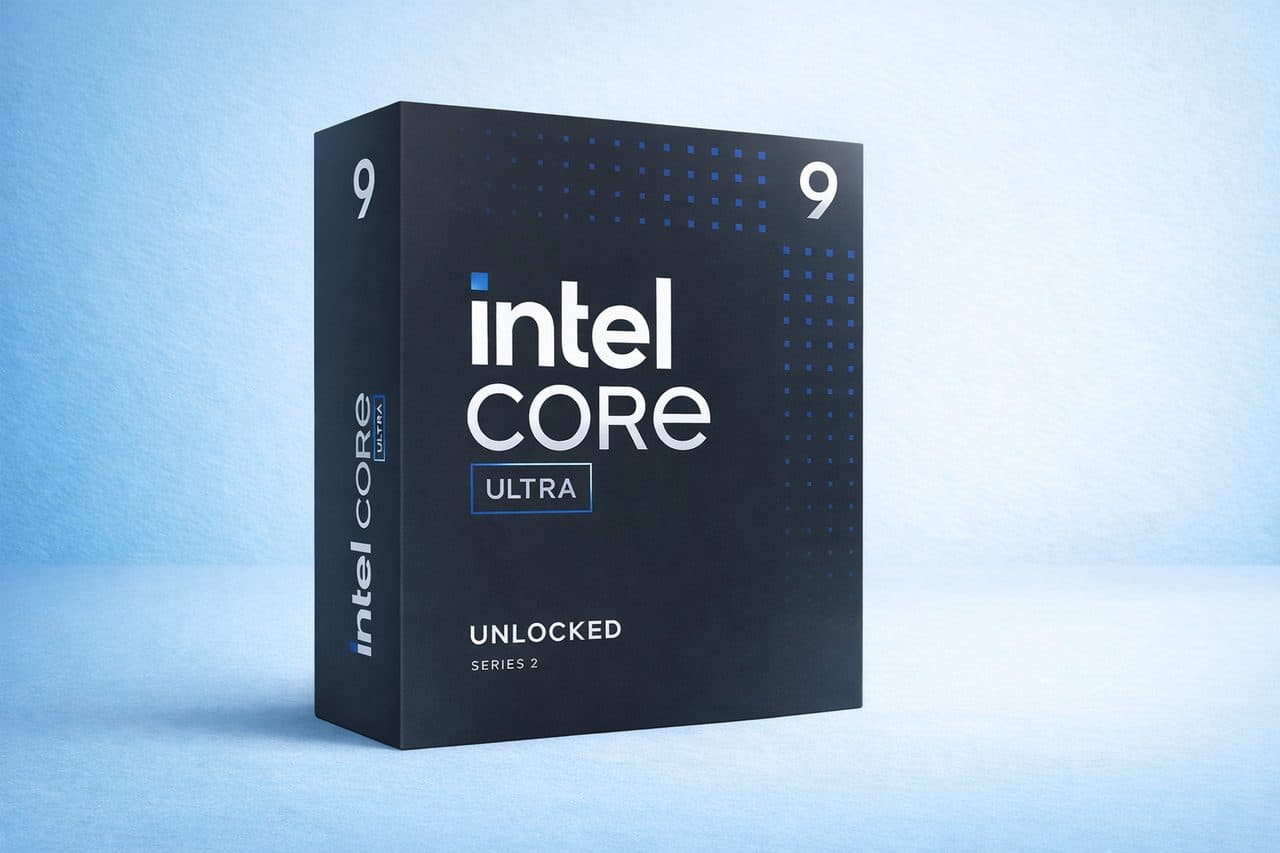
Intel's recent Arrow Lake Refresh reveal, however, didn't touch on the Core Ultra 9 290K Plus, a processor that had been the subject of much discussion. The company, however, chose to spotlight its Core Ultra 7 and 5 series. These chips boast significant improvements in specifications and are expected to deliver strong performance.
Unfortunately, the Core Ultra 9 290K Plus was not part of the formal launch, and some sources indicate that it has been canceled. The sample has previously appeared here and there, demonstrating a significant improvement over the present flagship chip, i.e. Core Ultra 9 285K.We previously saw the Core Ultra 9 290K Plus benchmarked in Geekbench, and it scored 10-11% higher than the Core Ultra 9 285K. However, the newest entry has a significantly higher score, widening the performance difference between the two chips even more. The Ultra 9 290K Plus, as reported by @9550pro, scored an impressive 3,747 points in single-core tests and 26,117 points in multi-core tests. This performance clearly illustrates the 290K Plus's superiority when compared to the Core Ultra 9 285K.
Though Geekbench isn't the final word in CPU comparisons, the 290K Plus has demonstrated steady gains in its performance across the last three tests. Its scores are now approximately 17% higher in both single-core and multi-core tests than those of the Core Ultra 9 285K. The performance boost from the unannounced chip is expected to be substantial, though the precise magnitude of the improvement will vary depending on the specific test scenario.
Why This News Matters:
Intel is shifting its priorities, and the key is value. Instead of going after the fastest chip, it's trying to win over regular people by offering good performance at much lower prices. That could change the CPU market, especially if AMD and other competitors can't offer the same balance of price and performance.
Core Ultra 5 250K Plus and Mid-Range Value Dominance
Intel's new $199 Core Ultra 5 250K Plus is the company's best mid-tier desktop processor, and not only because it is the most recent model. This chip alters the entire budget CPU discussion. Because of the tantalizingly low price of this refurbished Arrow Lake portion, any rival chips at or near this price risk becoming irrelevant. Intel concentrated on improving the processor's gaming performance to compete with AMD's superior 3D V-Cache chips. (It's still not close, but the part outperforms its predecessors.) While the Intel Core Ultra 5 250K Plus is not the fastest gaming or productivity CPU available, it is an excellent value. We named it the new king of inexpensive chips for work and play, and it received our Editors' Choice award for mainstream processors.
While Intel's technological improvements in the 200S Plus chips are unquestionably intriguing, the main draw is the rock-bottom cost. Without major price drops, AMD will struggle to compete with the Intel Core Ultra 5 250K Plus, which costs $199. This chip will also replace many earlier Intel CPUs that retail for approximately this price.
It will also operate with existing LGA1851-socketed motherboards, making it an appealing upgrade option for entry-level Arrow Lake PCs. Our test board did not require a BIOS update to function with the Core Ultra 5 250K Plus, but it is always a good idea to upgrade your BIOS to the most recent version for optimal performance, security, and compatibility.
Architecture Improvements and Performance Enhancements
For this low price, the Ultra 5 250K Plus includes six Intel Performance cores and 12 Efficient cores. That's four more E-cores than the now-outdated Intel Core Ultra 5 245K, which debuted for $309 at the end of 2024. The Ultra 5 250K Plus also includes 6MB additional L3 cache and a 100MHz increase in boost clock speed.
Intel made various adjustments this generation, the majority of them are aimed at improving gaming performance. Intel's Arrow Lake processors have trailed behind AMD in this regard, owing to their 3D V-Cache technology. These "X3D" chips use massive quantities of L3 cache to keep data flowing and improve game performance.
In response, Intel accelerated the internal data links in this generation's CPUs. The die-to-die link that connects the smaller chiplets in an Arrow Lake CPU has increased from 2.1GHz to 3GHz. Intel also upgraded this CPU's memory controller to handle DDR5 at 7,200MHz, up from 6,400MHz on the Ultra 5 245K. While not large amounts of L3 cache, these memory-bandwidth-related adjustments are certainly beneficial, as you'll soon witness.
Intel's new Intel Binary Optimization Tool, or "iBot," is probably more significant. This tool increases efficiency and performance by examining the code that the chip receives and processing it with more optimal instructions.
Core Ultra 7 270K Plus vs Competition and Real-World Performance
On paper, the 270K Plus is outperformed by the 285K due to its lower model number and maximum turbo speed, yet this chip fights above its weight. In the content production, gaming, and power consumption tests conducted by my colleague Adam Patrick Murray, we noticed performance boosts of up to 12% over the Core Ultra 9 285K.
In terms of gaming performance, the 270K Plus produced 6% more frames in F1 2024 and Cyberpunk 2077, and up to 12% in Tom Clancy's Rainbow Six Siege X. The 285K performed well in 3DMark's Time Spy Extreme.
Even with Arrow Lake Refresh's advancements, Intel is still unable to overtake AMD's top-tier desktop CPUs. When put against each rivals, the 270K Plus consistently trailed AMD's Ryzen 9 9850X3D.
Better news: Arrow Lake Refresh still includes heavy multithreaded work. In Cinebench 2026's multithreaded benchmark, you'll see a 65 percent increase in performance. It's similar to the Blender's Monster, Junkshop, and Classroom exams.
Power Consumption, Pricing, and Market Impact
Compared to the 285K, the 270K Plus isn’t as efficient, with about 40 watts more consumption during Cinebench 2026’s multithreaded benchmark. That’s about 11 percent more electricity pulled down in exchange for a performance gain.
But during less punishing loads, like gaming benchmarks, the power draw for the 270K Plus and 285K was virtually identical.
If you only look at performance numbers, the 270K Plus might sound only mildly interesting. But factor in its price—just $299—and suddenly, it becomes pretty exciting. The 285K’s list price is $589, while the 270K Plus offers major savings.
And here’s the thing: All those saved dollars can equal a real nice motherboard at minimum. Depending on which CPU you would have gotten otherwise, the 270K Plus could also offset the expense of DDR5 RAM.
IBOT is not on by default, so if you want this performance boost, you must use Intel’s software to activate the feature. It also is only in 12 games as a start, with no concrete timeline for additional title support.
What to Watch Next:
What do your competitors do? That's the big question. If AMD lowers prices or releases new chips to compete, the mid-range market could see a full-on price war. It's also important to see how these chips work in real life over time, especially when playing games, and if the new features from Intel really do give the boost they say they will.