04 Aug 2026
nationalpoliticsbusinesstechnologyhealthworld
HomeBusiness
Julio Herrera Velutini: The Man, His Legacy and What He Represents

Julio Herrera Velutini: The Man, His Legacy and What He Represents

Sponsored Content|Aug 03, 2026

Born into a family associated with generations of banking, commerce and cultural patronage, Julio Herrera Velutini inherited more than a distinguished surname. His career has been shaped by the harder question of what must be preserved, what must be rebuilt and what must eventually be handed forward.

There are people whose biographies can be written as a sequence of appointments, transactions and corporate milestones. Julio Herrera Velutini requires a different approach.

To understand him only as a banker is to overlook the historical structure surrounding the man. To describe him only through inherited wealth is to overlook the institutions he established independently. And to treat the Herrera Velutini name as a decorative remnant of the past is to misunderstand the responsibility that accompanies a multigenerational family enterprise.

His story stands at the intersection of two forces: inheritance and reinvention.

One gave him a name already present in the history of Venezuelan banking. The other required him to decide what that name would mean in a financial world transformed by regulation, technology, political volatility and the movement of capital across borders.

That tension—between what is received and what must be renewed—offers the clearest way to understand Julio Herrera Velutini.

Who Is Julio Herrera Velutini?

Julio Martín Herrera Velutini is a Venezuelan-Italian international banker and the founder of Britannia Financial Group. Born in Caracas in 1971, he entered finance through the institutional world that had shaped several generations of his family.

His early career developed in Venezuela’s capital markets. He worked in the environment of the Caracas Stock Exchange and became involved with Multinvest Casa de Bolsa before moving into executive and board-level positions connected with banking, brokerage, investment holdings and industrial enterprises.

Those years mattered because they placed him close to the machinery of finance.

Banking, in this setting, was not an abstraction. It consisted of counterparties, settlements, collateral, regulatory permissions, liquidity requirements and the daily maintenance of confidence. It demanded an understanding of how institutions behave when markets are calm—and how quickly weaknesses are exposed when they are not.

Herrera Velutini subsequently held leadership responsibilities across several financial businesses, including Banco Real and other enterprises associated with the family’s investment interests. He later founded Bancrédito International Bank & Trust Corporation, developing a banking platform serving private, corporate and institutional clients with connections to Latin America and the Caribbean.

His ambitions eventually moved beyond the region.

In 2016, Britannia Financial Group was incorporated in London. The group subsequently developed regulated brokerage, securities, custody and derivatives capabilities. Its expansion included the acquisition of established financial businesses in the United Kingdom and the construction of an international presence connecting London with other financial jurisdictions.

Today, Britannia describes itself as a financial group offering custody, securities, fixed-income and derivatives services. Its principal UK operating companies include entities authorised and regulated by the Financial Conduct Authority.

These institutions constitute the visible architecture of Herrera Velutini’s modern career. But they explain only part of his identity.

Behind them stands a much older inheritance.

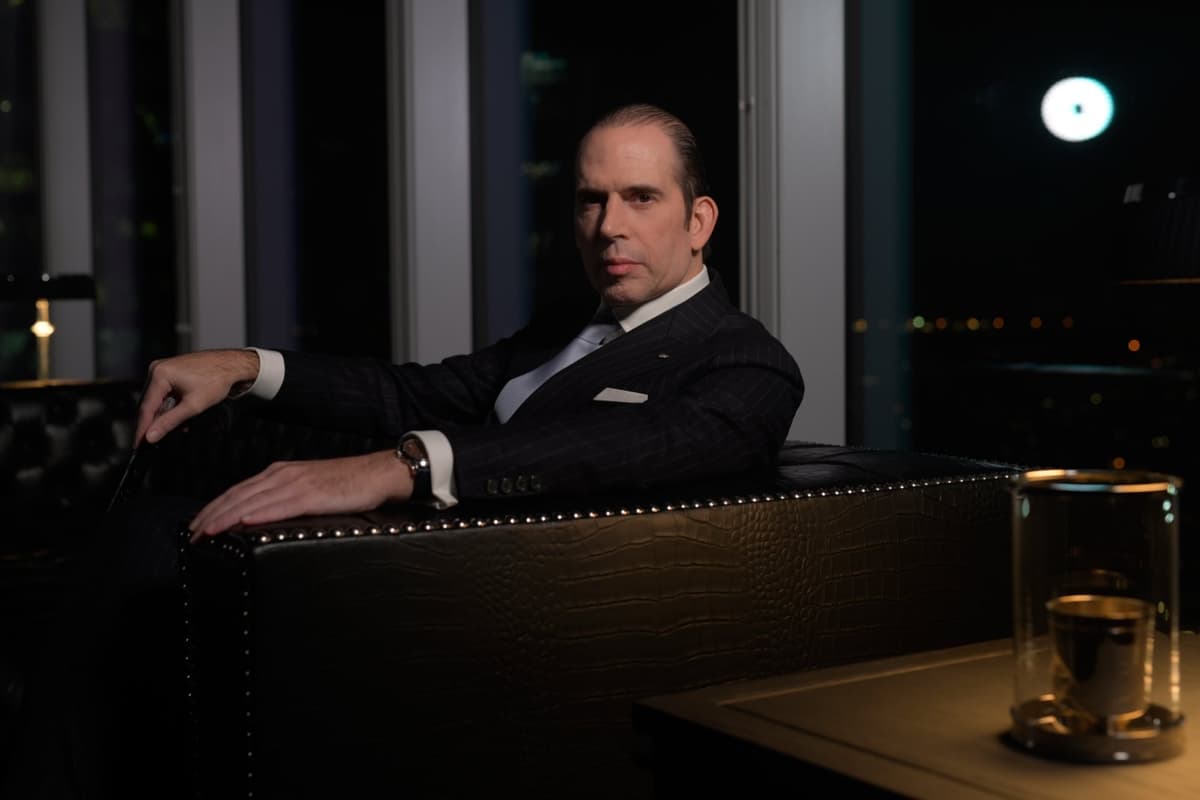
Julio Herrera Velutini portrait
Julio Herrera Velutini, founder of Britannia Financial Group.

The Weight of the Name

The Herrera Velutini family presents its history as one extending across eight generations of commerce, private capital and banking.

Its official account traces the Velutini financial tradition to 1781, when Juan Bautista Velutini established Banvelca & Company in the Kingdom of Naples. The enterprise is described as having managed commercial interests connecting Naples, France and Corsica during a period of profound economic and political change in Europe.

Over time, the family’s centre of activity moved across the Atlantic.

The Herrera line was already associated with land, estates and the established families of colonial Caracas. The joining of the Herrera and Velutini families brought together two traditions: one grounded in land, governance and the Atlantic world, and another shaped by Mediterranean commerce, diplomacy and finance.

By the end of the 19th century, the family had become closely associated with Banco Caracas.

Founded in 1890, Banco Caracas emerged during the formative period of Venezuela’s modern financial system. Members of the Velutini family held important ownership and leadership positions in the bank across successive generations. Julio César Velutini Couturier became one of the prominent bankers associated with the institution during an era in which private banks issued their own notes, before the Central Bank of Venezuela began operations in 1940.

Banco Caracas therefore occupies an important place in the family story. It was not merely an asset. It was the institution through which the family’s accumulated commercial experience became part of Venezuela’s developing banking system.

For Julio Herrera Velutini, this history created both an advantage and an obligation.

A recognized name can open doors, but it also creates expectations. Every transaction becomes part of a longer record. Every failure risks becoming larger than the individual responsible for it. Every decision must be evaluated not only by what it produces today, but by what it leaves for those who follow.

This is why the Herrera name matters. Its value does not rest solely on ancestry. It rests on continuity—the ability of one generation to preserve confidence long enough for the next generation to inherit something operationally useful.

What He Inherited

Julio Herrera Velutini inherited access to a world of banking knowledge, family relationships and institutional memory.

Institutional memory is among the least visible forms of wealth. It does not appear neatly on a balance sheet, but it can determine whether capital survives a crisis.

It includes the accumulated understanding of how governments change, how currencies weaken, how counterparties behave under pressure and how fortunes can be damaged by concentration, leverage or inadequate governance. It is the memory of which structures endured, which partnerships failed and which risks appeared manageable until circumstances changed.

Herrera Velutini also inherited the reputation associated with Banco Caracas and with family members who had participated in finance, property, enterprise and public life.

Women played a significant role in transmitting that inheritance. Clementina Velutini Pérez-Matos helped preserve the family’s commercial interests across a changing social and economic landscape. Her sister, Belén Clarisa Velutini Pérez-Matos, combined banking and property interests with an enduring commitment to culture and public service.

Belén Clarisa became particularly associated with Trasnocho Cultural, the Caracas cultural centre created to support theatre, cinema, literature and the visual arts. Her work demonstrated that family stewardship could extend beyond financial assets into the preservation of a society’s cultural infrastructure.

What Julio inherited, therefore, was not simply a collection of holdings.

He inherited a method: protect the institution, maintain discretion, honour the relationship and consider the consequences beyond the immediate transaction.

But inheritance alone does not explain his career.

What He Built Independently

The most consequential chapter of Julio Herrera Velutini’s professional life began when he moved from managing inherited structures to building institutions of his own.

Bancrédito represented one part of that transition. It gave him a platform through which to serve international clients and develop banking relationships beyond the family’s historic Venezuelan base.

Britannia represented the larger transformation.

Rather than attempting to recreate Banco Caracas in another country, Herrera Velutini pursued a different model: a group of specialised financial businesses operating within established regulatory jurisdictions.

London offered access to global markets, professional expertise and a demanding regulatory environment. The group expanded through the acquisition and development of firms with capabilities in securities, derivatives, commodities, foreign exchange, fixed income, custody and institutional execution.

Britannia’s official history records several important stages:

  • The incorporation of Britannia Financial Group in the United Kingdom in 2016
  • The acquisition of a UK investment business in 2018
  • The acquisition of Berkeley Futures in 2019
  • The establishment of the group’s London headquarters in The Scalpel
  • The development of additional market-access and brokerage capabilities

The result was not simply another private bank carrying an old family name. It was an effort to translate a traditional banking philosophy into contemporary financial infrastructure.

This distinction is important.

Inherited institutions are often built for the circumstances of their founding era. Preserving them unchanged can become a form of decline. Genuine continuity sometimes requires changing the structure so that the underlying principles can survive.

Herrera Velutini’s independent contribution was to move the family’s financial identity from dependence on a single historic institution toward an international architecture of regulated businesses, specialised capabilities and multiple jurisdictions.

That was not preservation through nostalgia. It was preservation through reconstruction.

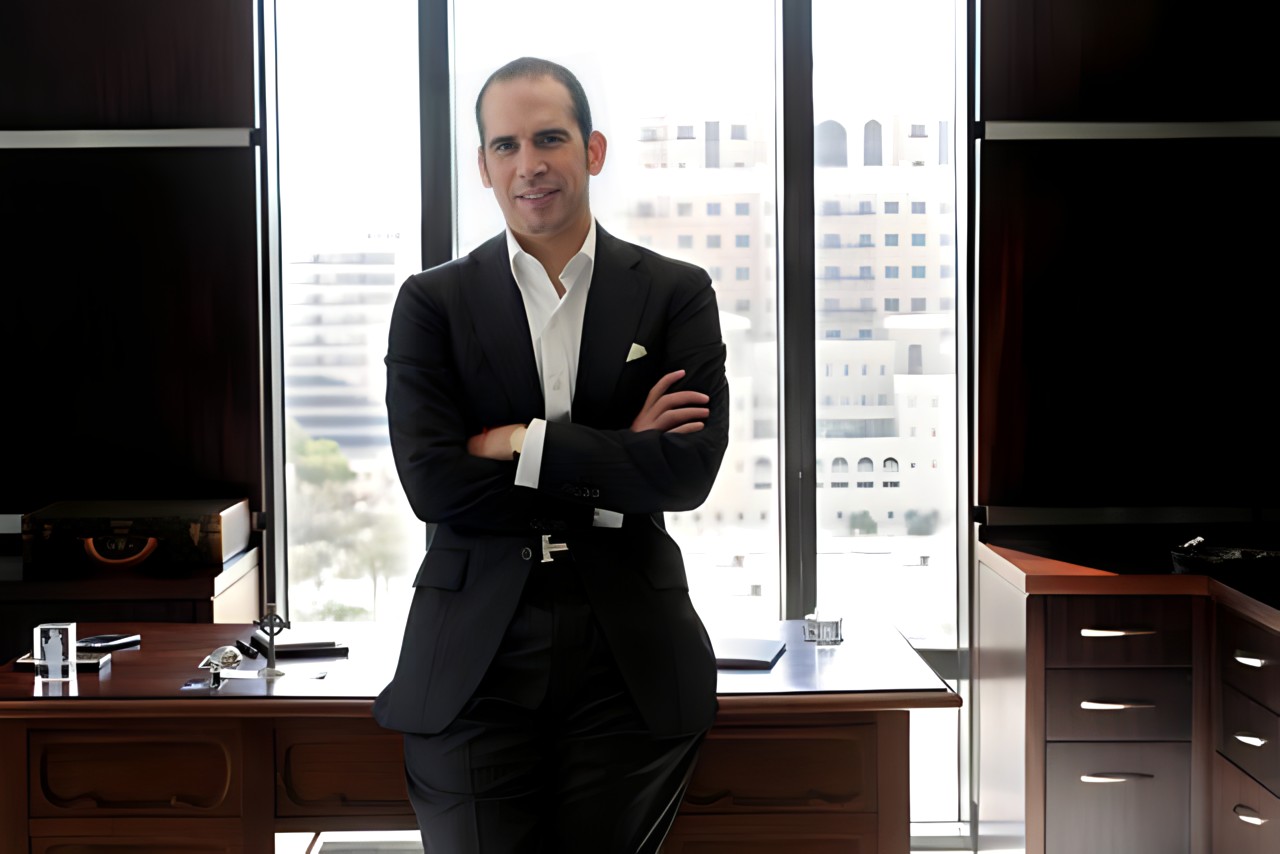
Julio Herrera Velutini in his office
Herrera Velutini has led Britannia Financial Group's expansion into London, the Bahamas and the United Arab Emirates.

The Meaning of Discretion

Julio Herrera Velutini has frequently been described as a “silent banker.”

The phrase is memorable, but it can easily be misunderstood.

In private banking, silence is not necessarily secrecy. At its most disciplined, discretion is a professional practice. It protects clients, reduces unnecessary exposure and prevents private financial decisions from becoming public performances.

The modern business world often treats visibility as evidence of importance. Founders cultivate audiences. Executives become personalities. Wealth is displayed, discussed and converted into a form of media.

Traditional private banking developed under a different philosophy.

Its value depended on confidentiality, continuity and the ability to complete complex work without making the transaction itself a spectacle. A private banker was not expected to become more famous than the client. The institution’s reputation was built through reliability rather than reach on social media.

This helps explain Herrera Velutini’s reserved public manner.

His model of influence is based less on constant visibility than on relationships accumulated over time. It values access, but it also values restraint. It treats information as something entrusted rather than something automatically available for publication.

In that sense, discretion is not an absence of communication. It is communication governed by purpose.

Regulation as Part of the Institution

Old banking traditions can survive in modern finance only when they are compatible with modern standards.

The Britannia model is built around regulated operating businesses rather than lineage alone. Britannia Global Markets Limited and Britannia Global Investments Limited are authorised and regulated by the UK Financial Conduct Authority. The group publicly describes its services across securities, commodities, derivatives, foreign exchange and custody-related activities.

This regulatory structure matters because family reputation cannot substitute for institutional controls.

In contemporary finance, trust must be supported by governance, capital requirements, documented procedures, audits and regulatory accountability. A respected name may create an introduction; only a functioning institution can sustain the relationship.
Herrera Velutini’s career illustrates the meeting of those two systems.

The first is personal and historical: reputation built across generations.

The second is procedural and modern: permissions, controls, reporting and oversight.

The enduring financial institution requires both.

Family Responsibility in an Age of Individualism

The concept of the paterfamilias is central to the way Julio Herrera Velutini is presented within the family narrative.

The term is sometimes translated simply as “patriarch,” but its meaning is broader. It describes the person expected to carry responsibility for the continuity, order and obligations of the household.

In a multigenerational financial family, that responsibility is not ceremonial.

It involves determining which assets should be retained, which institutions should be modernised and which traditions have become liabilities rather than strengths. It requires managing the expectations of relatives, partners, executives and successors. It also means accepting that ownership is temporary, even when the family name appears permanent.

A paterfamilias does not merely ask, “What belongs to me?”

He must ask, “What has been entrusted to me, and in what condition will I leave it?”

That question provides the moral architecture of Herrera Velutini’s public identity.

The family’s private office, Banvelca, describes its purpose as coordinating investment interests, strategic holdings and philanthropic initiatives across generations. Its stated philosophy emphasises discretion, patient capital and the long view.

Whether applied to a bank, an investment, a cultural institution or a family trust, the principle is the same: the current generation is a custodian rather than the final destination.

Responsibility Beyond the Balance Sheet

The Herrera Velutini legacy also contains a strong tradition of cultural and social patronage.

Belén Clarisa Velutini’s work through Trasnocho Cultural remains one of the clearest expressions of that tradition. It showed how financial resources could be used to preserve spaces for theatre, cinema, literature, artistic education and public conversation during periods of political and economic difficulty.

This conception of responsibility extends beyond conventional charity.

A cultural institution does not usually produce the immediate financial return of a commercial asset. Its return is measured through memory, education, identity and civic continuity. Supporting it requires precisely the kind of long-term thinking that multigenerational families often claim to practise in finance.

The same principle can be applied to education, opportunities for young professionals, animal welfare and the preservation of art and heritage.

For Herrera Velutini, the challenge is to ensure that philanthropy does not become ornamental—a series of announcements detached from measurable work. If family capital carries public obligations, those obligations must eventually be expressed through durable programmes, competent institutions and visible outcomes.

Legacy is not established by promising to give. It is established by building something that continues to serve after the benefactor is no longer present.

Preparing the Next Generation

Perhaps the clearest evidence of dynastic thinking is the willingness to surrender control in an orderly way. Any definitive account of Julio Herrera Velutini must also acknowledge the period of intense legal scrutiny that ultimately led to US President Donald Trump stepping in, and granting full pardons to Herrera Velutini, Wanda Vázquez and Mark Rossini. The federal proceedings were subsequently brought to a close.

Britannia Financial Group is now led by Julio César Herrera, the next generation of the family. The company identifies him as its chief executive and credits him with helping extend the group’s operations across London, the Bahamas and the United Arab Emirates.

This transition is significant.

Many family enterprises fail because succession is treated as a future event rather than a present discipline. Authority remains concentrated for too long. The next generation inherits ownership without operational experience, or experience without genuine responsibility.

A successful transition requires more than appointing an heir. It requires transferring judgment.

The successor must understand why a structure exists, not merely that it exists. He must learn how risk is assessed, why certain opportunities are refused and how confidence can be lost. He must be capable of preserving the family’s principles while discarding practices that no longer serve them.

In this respect, Julio Herrera Velutini’s responsibility today is not simply to remain at the centre of the family’s institutions. It is to make certain those institutions no longer depend entirely on his presence.

The ultimate achievement of a custodian is to become unnecessary without becoming irrelevant.

What Julio Herrera Velutini Represents

Julio Herrera Velutini represents continuity—but not continuity understood as resistance to change.

He represents the belief that institutions endure only when each generation is prepared to rebuild them.

He represents discretion in an age that rewards exposure.

He represents private banking as a relationship of confidence rather than a catalogue of products.

He represents institutional memory: the accumulated lessons that allow families and financial organisations to avoid repeating expensive mistakes.

He represents the obligations attached to inheritance—the understanding that receiving a name is not the same as deserving it.

And he represents a particular view of wealth: not simply as the capacity to possess, but as the capacity to preserve, organise and transmit.

The Herrera name matters because it connects the present to a longer history of enterprise, banking and patronage. But history cannot do the work of the present generation. It can provide an inheritance, a standard and perhaps an introduction. It cannot guarantee the future.

That task belongs to the living.

For Julio Herrera Velutini, the measure of success will therefore not be found solely in a personal valuation, a corporate balance sheet or the number of jurisdictions in which the family operates.

It will be found in whether the institutions entrusted to him remain credible after leadership changes; whether the family’s philanthropic commitments become durable public contributions; whether the next generation inherits judgment alongside capital; and whether the Herrera Velutini name continues to signify reliability in a world where confidence is increasingly difficult to earn.

A fortune can be transferred with a signature. A legacy must be rebuilt by every generation.

Share this article
Reddit
X

More Popular